
 OB-Xd 2Retromulator core
 OB-Xd 3Classic engine
 OB-Xd 4New engine
Synthesizers
Sampler & Effects
Emulators & Voice
Controllers & Editors
Productivity
Presets by Product
Highlights
Sound Designers
Own OB-Xd 2 or OB-Xd 3 and TED-8? Upgrade to OB-Xd 4 for $29, for a limited time.
Sign in to claim ›Own OB-Xd 2, OB-Xd 3, TED-8, Discovery, Discovery Pro or Corona? OB-Xd 4 is yours for $49, for a limited time.
Sign in to claim ›Launch price until December 31, 2026. OB-Xd 4 will be $199 from January 1, 2027.
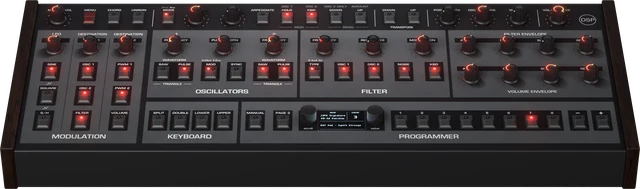
OB-Xd 4 is a polyphonic analog modeled synthesizer with an engine measured from analog hardware: the oscillators, the filter types, the envelopes, the LFOs, portamento and the differences between the eight voices were measured and compared sample by sample.
The panel has a second parameter page, and programs use the same parameters and value ranges as the OB-X8, so OB-Xd 4 works as the editor and librarian for an OB-X8 connected over USB. Programs made in OB-Xd 3 still load and play with their own engine.
Measured from analog hardware
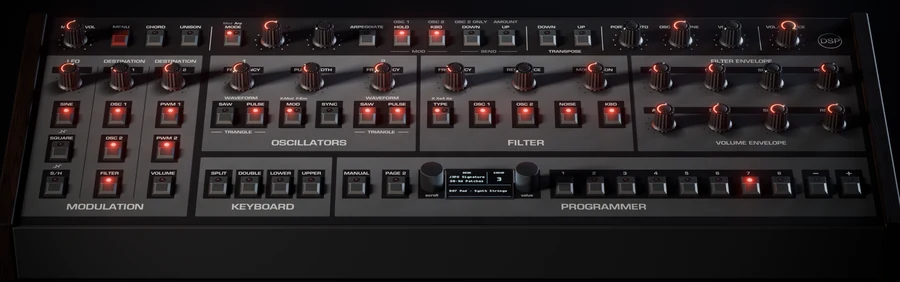
The engine started from about 60 capture sessions of analog hardware at 24-bit / 192 kHz, each from a plain init program: filter sweeps for every filter type, resonance and saturation at many levels, envelope and LFO timings, portamento laws, oscillator shapes, and the tuning, pan and filter differences between the eight voices.
Envelopes, LFOs, portamento, voice allocation and the arpeggiator were timed and matched against those captures. The analog parts (oscillators, filter circuits and mixer) were modeled from circuit references and fitted to the captures. A test harness compares OB-Xd 4 with the captures sample by sample, so every change is measured instead of judged by ear alone.
Oscillators
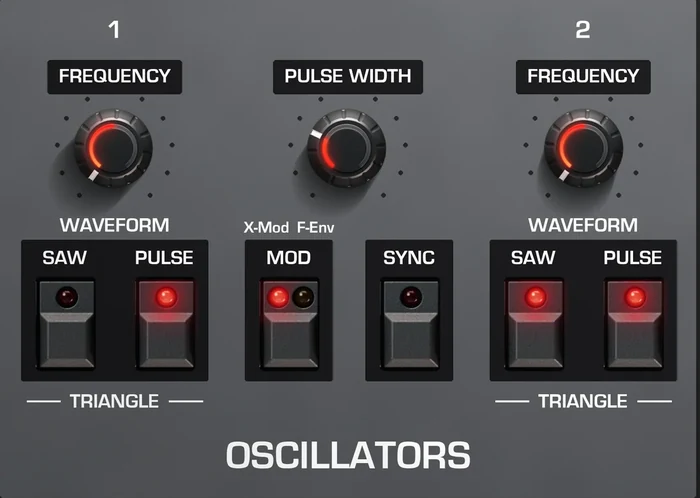
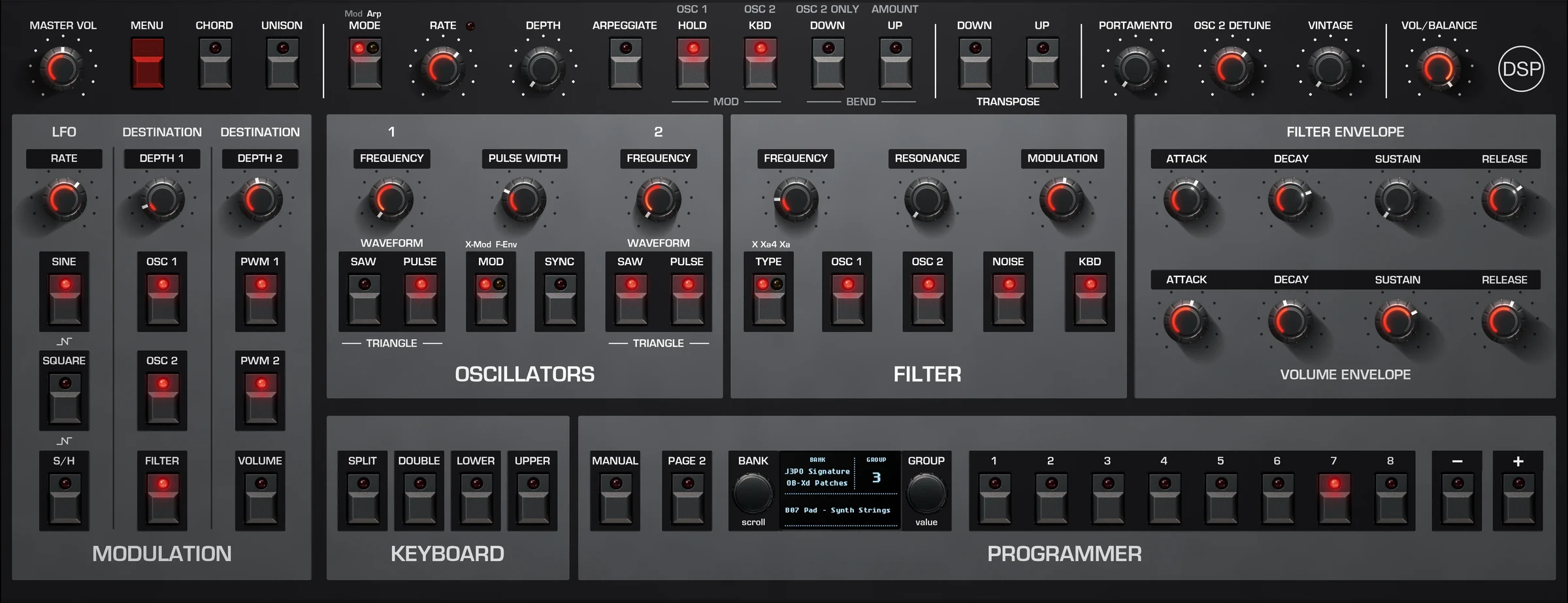
Two oscillators per voice with saw, pulse and triangle, hard sync and cross modulation, with measured pitch laws and voice detune. The oscillators keep running between notes, so each note starts at its own phase. With X-Mod on, the oscillators run at twice the engine rate, which keeps bright sync and cross-mod sounds clean. Osc Square Mode picks pulse level A or B.
Seven filter types
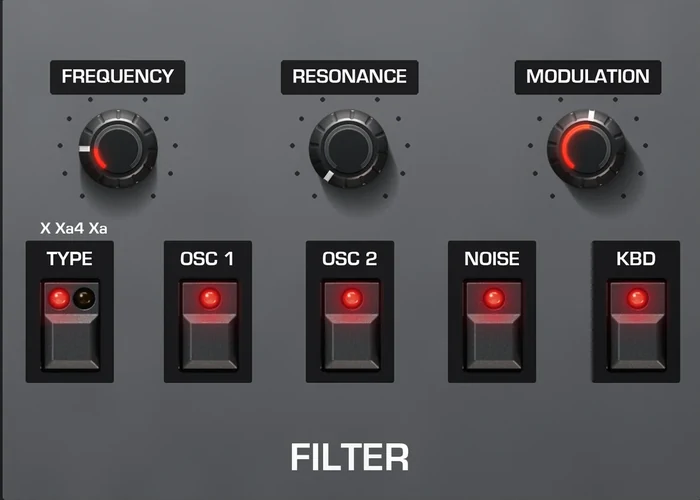
TYPE steps through three filters: 2-Pole A, 2-Pole B and 4-Pole. Page 2 adds SV High Pass, SV Band Pass and SV Notch, built on a 2-pole state variable filter, and 4-Pole Mod. Each was measured on its own, down to how the filters saturate as resonance and level rise.
The filter types run at 4x oversampling or more, 4-Pole Mod at 8x. The Engine menu trades CPU for oversampling (Eco, Normal, Max), and registered bounces always render at Max.
Envelopes, LFO and Vintage
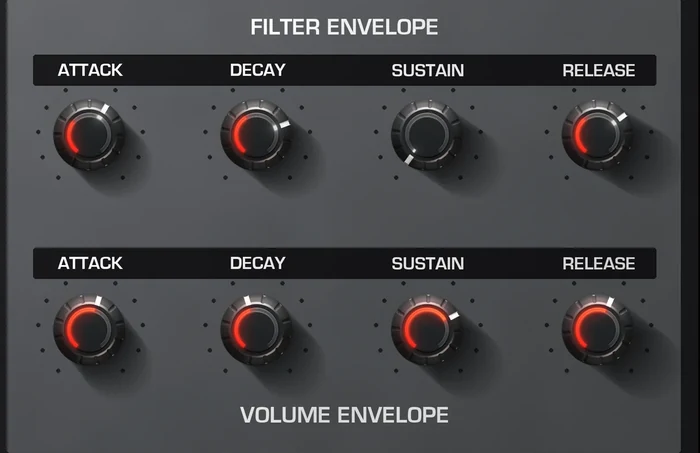
Envelopes, LFO and portamento follow timing measured from analog hardware. Page 2 chooses Type A or Type B envelope and LFO laws. The LFO offers sine, square, S/H and rising or falling saws into two destination columns, and voices 5 to 8 can run their LFO 90 or 180 degrees behind voices 1 to 4.
VINTAGE adds voice-to-voice pitch and cutoff differences like those of an older analog unit.
Split, Double and Binaural
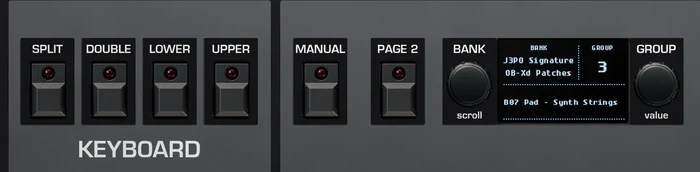
Split the keyboard or stack two programs, with LOWER and UPPER choosing the layer the panel edits. Entries are stored in banks of 128 (Split, Split+, Double, Double+ and Binaural), each pointing at a lower and an upper program. Binaural plays one program on both layers, lower on the left and upper on the right. Voice Allocation 4 + 4 gives each layer four voices, and VOL/BALANCE sets the balance between the layers.
Arpeggiator and chord memory

The arpeggiator plays held or latched notes forward, backward, both ways or in random order, from about 0.14 to 30 steps per second, or in note values from 1/1 to 1/32 triplet that follow the host tempo. Page 2 shifts the pattern by an octave and steps it through up to five transpose intervals.
CHORD stores a held chord and plays it transposed from every key, with key limit and hold modes.
Editor and librarian for the OB-X8
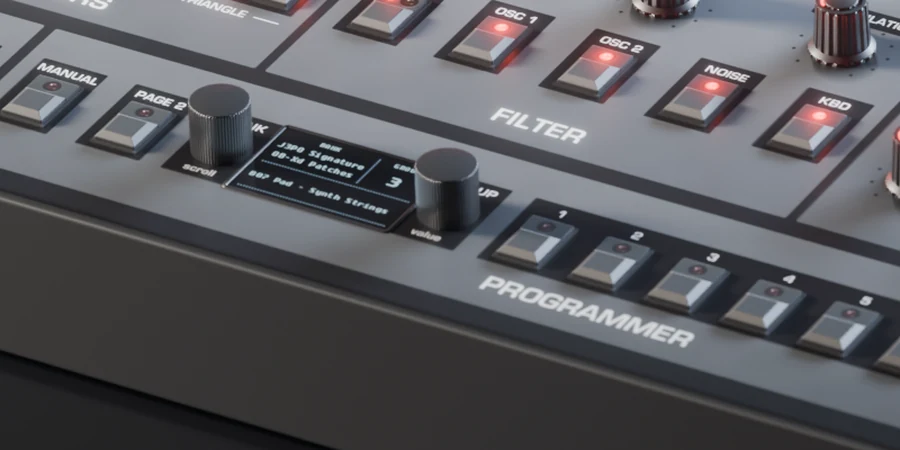
Connect an OB-X8 over USB and OB-Xd 4 talks to it directly, without MIDI routing in the host. Link it and edits travel both ways: turn a knob on the unit and the control moves in OB-Xd 4, edit in OB-Xd 4 and the unit follows. Program changes can follow in both directions.
On the first link OB-Xd 4 offers to download the unit's six banks (OB-X8, OB-8, OB-Xa, OB-SX, OB-X and User). Get or send the edit buffer, write programs or whole banks back to the unit, back up and restore the full OB-X8 as one SysEx file, and send OS updates from the plugin. Writes and restores always ask before they overwrite.
OB-X8 is a registered trademark of Sequential Synths Limited. discoDSP is not affiliated with, endorsed by or licensed by Sequential Synths Limited.
Page 2 and the programmer

PAGE 2 opens the second parameter page: portamento match, quantize and legato, pan modes, LFO and envelope types, unison voices and key priority, aftertouch, bend ranges, modulation quantize and more. The programmer display names every control you touch and shows its value.
Key combinations work too: hold CHORD, SPLIT, AMOUNT, UNISON, LOWER or UPPER and press a key to set the chord key limit, split point, bend interval, portamento or layer transpose.
Your OB-Xd 3 sounds
Programs made with OB-Xd 3 keep playing on the OB-Xd 3 engine, here called Legacy, with its own filter (Classic or Circuit), envelopes and LFO. Each program stores which engine it uses for the filter, envelopes, LFO and oscillators.
OB-X8 programs and banks import as SysEx and play on the new engine, and any program or bank exports back to OB-X8 SysEx.
And more
MPE: per-note bend of ±48 semitones, per-note CC 74 to oscillator 2 and per-note pressure to the filter through the Page 2 routing.
MIDI Learn: right-click any control to assign a CC. MIDI boards for hardware controllers come included, and the OB-X8 board receives the unit's NRPN messages, so an OB-X8 can play and edit OB-Xd 4 from its own panel.
MTS-ESP Microtuning: full ODDSound MTS-ESP support.
Programs and Banks: banks of 128 programs, single presets in folders with a disk browser, copy and paste of programs and Page 2 settings.
Window Size: 0.75x to 2x, plus Full Screen.
Supported Formats
Universal Binary 2: Native Intel and Apple Silicon.
Standalone Application: No additional software required.
ProTools AAX. Apple Audio Unit. Steinberg VST3. LV2.



System Requirements
 Windows 10+. IntelIntel processors with AVX2 support:
 Monterey 12.0+. Apple Silicon or IntelMacBook Pro: Late 2013+
 Debian 10+. IntelIntel processors with AVX2 support:
Try OB-Xd 4 for free, for as long as you like, for non-commercial use. Everything plays in realtime as in the full version, with a few limits: oversampling stays off, the Engine menu goes up to Normal, AAX and LV2 bounces are disabled, and bounces made with the new engine carry a short noise burst at regular intervals. A license removes them all. OB-Xd 3 serials do not unlock OB-Xd 4, but OB-Xd owners can upgrade at a lower price.
Credit and Licensing
OB-Xd 4 is developed, programmed and designed by George Reales. The 4.x versions are built on the structure of the OB-Xd 3 codebase, co-developed with Vadim Filatov, with the DSP and the GUI fully rewritten.
OB-X8 is a registered trademark of Sequential Synths Limited. discoDSP is not affiliated with, endorsed by or licensed by Sequential Synths Limited.
 OB-Xd: What's New
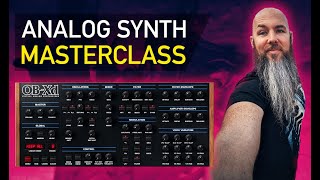 OB-Xd Playlist
 OB-Xd Mobile Playlist
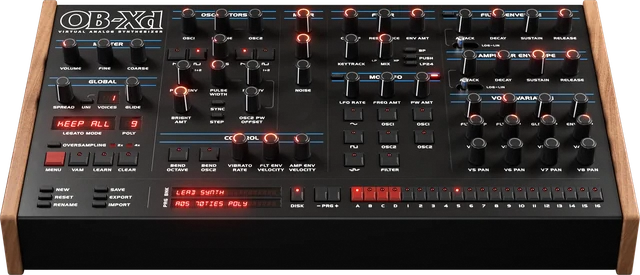
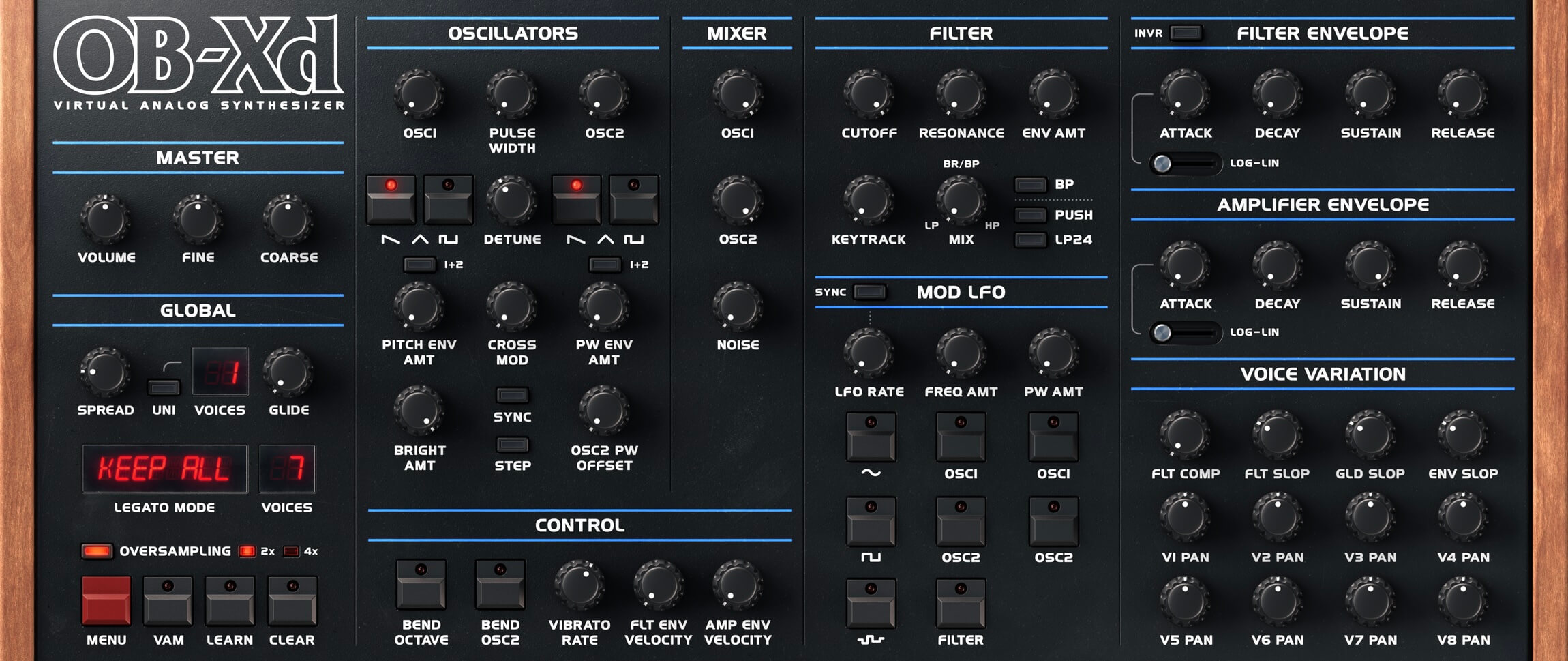
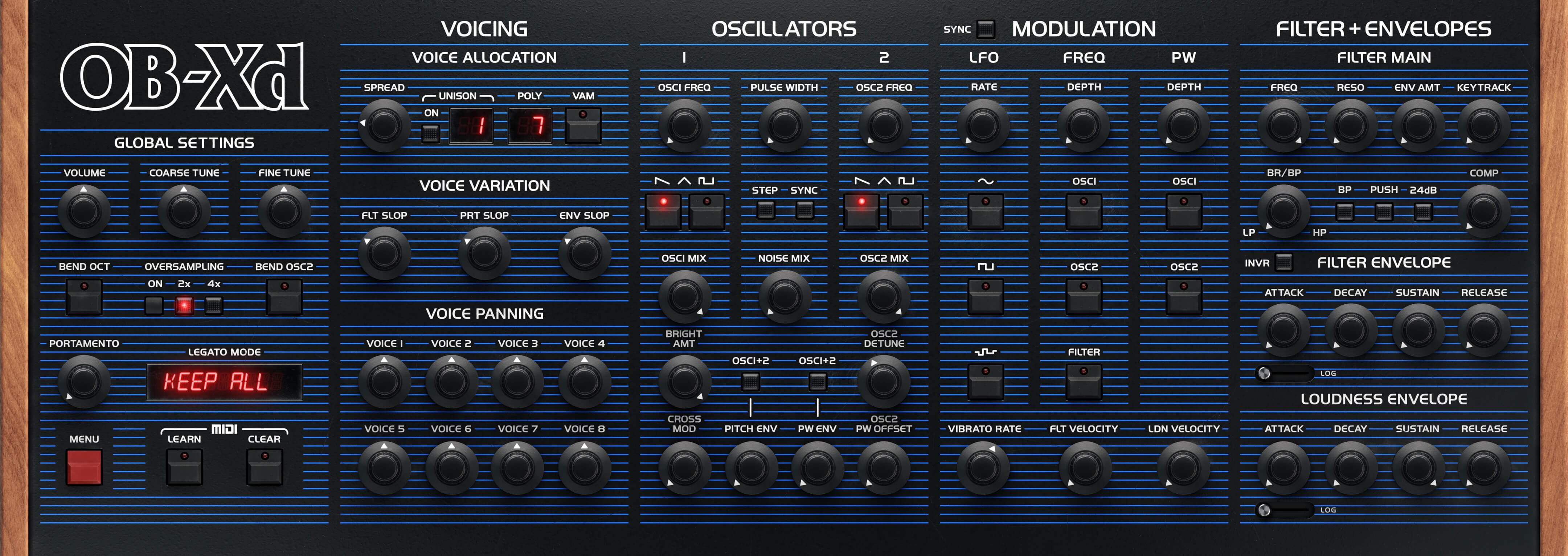
OB-Xd 3 is a polyphonic virtual analog synthesizer with the limits of 1979 hardware taken off. The voice architecture, filter character and envelope behavior of classic analog polysynths are kept, but the things that were physically impossible at the time (wide unison stacks, deep modulation, modern tuning systems) are now in reach.
Stacks up to 16 voices per note, holds complex chords without voice stealing, and runs efficiently on modern CPUs. Covers vintage bass and pad territory and pushes further into thick supersaw-style textures.
Rewritten with the original author
OB-Xd 3 is a complete ground-up rewrite of the engine, built hand-in-hand with original author Vadim Filatov. The classic character is intact, the bones underneath are brand new.
The engine moved from per-voice scalar processing to a fully vectorized design, with ~5x lower CPU than 2.x, room for 128 voice slots instead of 32, and the headroom to stack up to 16 detuned voices per note in polyphonic unison, which wasn't possible before. There are also much higher quality oscillators, new analog modeled filters and envelopes, and adaptive oversampling up to 4x for hardware-grade sound without melting your CPU.
The full technical comparison covers the details.
High Quality Oscillators
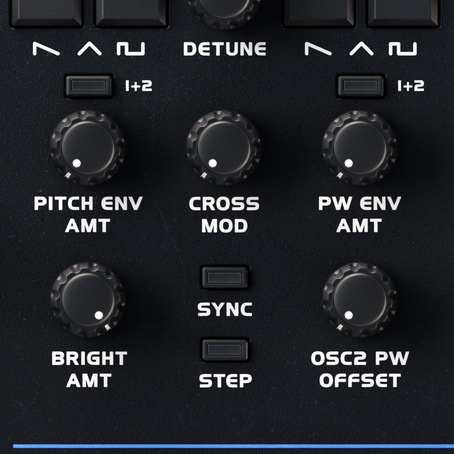
Saws and pulses keep their edge without the digital glass and aliasing that gives away most virtual analogs. Push the upper octaves hard and the top end stays musical, not buzzy. Three pulse-width tools shape the waveform: independent PW offset on Osc2, filter-envelope-driven PW, and dual-osc PW movement.
Improved Analog Modeled Filters
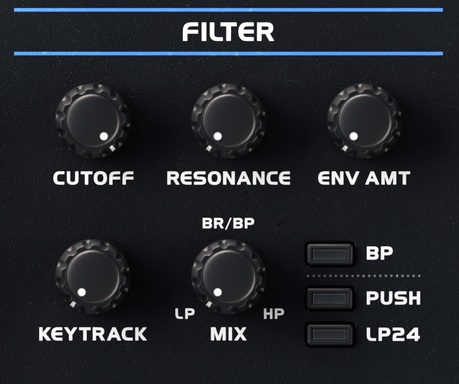
The filter sound of countless '80s anthems, now in two characters.
Circuit is measured from audio renders: the 2-pole follows a state variable filter knob position by knob position, and the 4-pole follows a CEM3320 low pass, down to the way its bass thins out as resonance climbs. Sweeps sing, resonance bites without going harsh, and at the top of the knob the filter breaks into its own pure tone, a full extra oscillator hiding inside.
Classic keeps the OB-Xd sound you already know, and every patch and project you made before opens exactly as it did.
Attack envelope shape
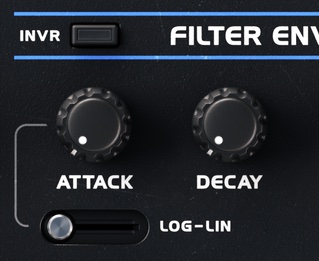
The RC capacitor curve behind the attack of classic analog keys, plucks and percussive leads is now a log-lin slider you can sweep from snappy logarithmic to gentle linear, independently on the filter and amp.
From stab leads to breathing pads: push logarithmic for percussive plucks and aggressive lead attacks, sit in the middle for classic analog punch, dial toward linear for slow swells.
Polyphonic Unison
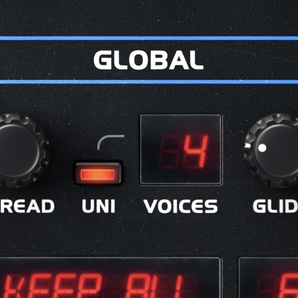
Polyphony 4 with 4 stacked voices = chord-pads with serious weight. Polyphony 1 with 16 stacked voices = supersaw mono leads. Same patch, two completely different instruments.
Unlike most virtual analogs, OB-Xd stacks up to 16 voices per note independently from how many notes you can hold, so you keep your chord polyphony and get the thickness. Push Spread above 50% and the stacked voices read as separate, opening up the stereo field.
MPE
Full MIDI Polyphonic Expression support with independent per-note pitch bend (X), timbre (Y, CC 74) and pressure (Z), each freely routable to multiple destinations. Plug-and-play with LinnStrument, ROLI Seaboard, Sensel Morph, Haken Continuum and more. OB-Xd auto-configures from the controller, and ships with factory presets for every major MPE surface.
Bi-directional MIDI
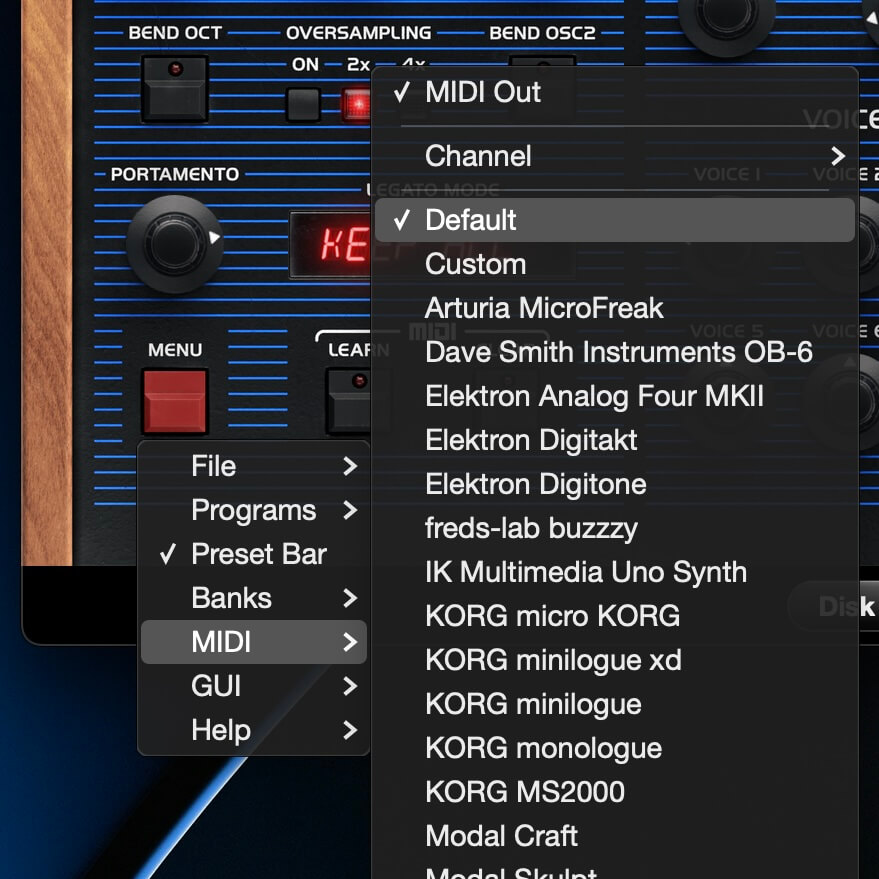
MIDI Out sends CC mirroring on channel 1 (or a selected channel). Pair it with the TouchOSC template or the SFC-OB hardware controller and the surface stays in sync with the plugin.
Preset search
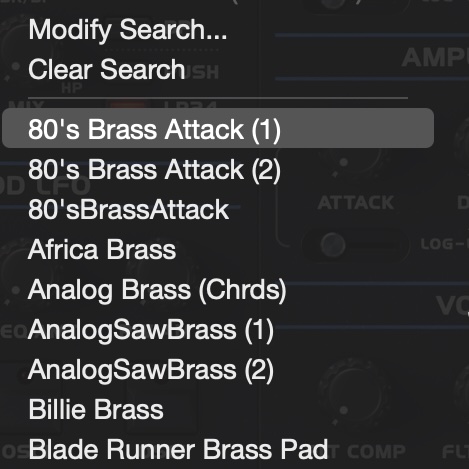
Recursive search across all disk preset folders with duplicate handling: same-named presets show as "(1)", "(2)", etc. Step through results in order.
Oversampling and More

Dual LFOs: two fully independent LFOs running in parallel, each with its own rate, three waveforms, two amount controls, five destinations, and per-LFO tempo sync. Stack a slow filter sweep over a fast vibrato, or sync both to the host for tight rhythmic patches.
Knob LED Visualizer: the interface reflects what the engine is doing as you play. Volume knob shows a true VU meter, the cutoff dot tracks live envelope and LFO modulation, ADSR strips animate during note playback, and any routed destination glows green so you see exactly what your modulation is doing.
Reworked MIDI Learn: live LCD prompts walk you through CC mapping. Save, rename, import or export full MIDI boards grouped by manufacturer, and ship presets with their CC layout intact.
Preset Bar Workflow: anchored Disk Browser, native Save / Rename dialogs, bank search, and shift-click shortcuts for prev/next jumping by bank or folder.
Standalone MIDI Out: virtual CoreMIDI port for routing OB-Xd's MIDI stream to external gear or other apps.
Analog Mode: per-voice component tolerances that bring the subtle detuning and filter wobble of vintage hardware. Stored per bank so different presets can use different amounts.
MTS-ESP Microtuning: full ODDSound MTS-ESP support for scales beyond 12-TET.
Dynamic Pan Presets: Random and Random OSC modes spread voices across the stereo field on every note.
Preset Import: loads OB-Xd 2.x patches and community fork presets directly.
Oversampling: 1x / 2x / 4x in the registered version.
Supported Formats
Universal Binary 2: Native Intel and Apple Silicon.
Standalone Application: No additional software required.
ProTools AAX. Apple Audio Unit. Steinberg VST. Steinberg VST3. LV2.

System Requirements
Windows 10+. IntelIntel processors with AVX2 support:
Monterey 12.0+. Apple Silicon or IntelMacBook Pro: Late 2013+
Debian 10+. IntelIntel processors with AVX2 support: iOS 14 or later.
The free trial version of OB-Xd is fully functional, with no major limitations on its features, but it prohibits commercial use.
The term commercial purpose means using the software for any fee, charge, tariff or other consideration directly or indirectly in connection with any commercial or other for-profit enterprise.
Credit and Licensing
OB-Xd is a software synthesizer licensed by Vadim Filatov. All rights reserved.
 OB-Xd: What's New
OB-Xd Playlist
OB-Xd Mobile Playlist
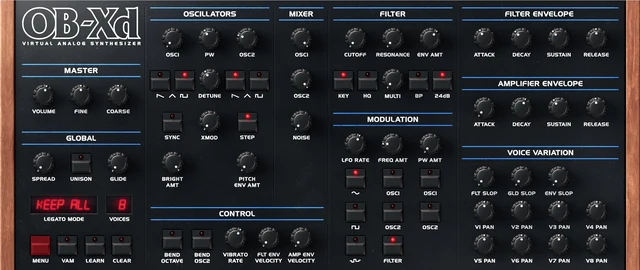
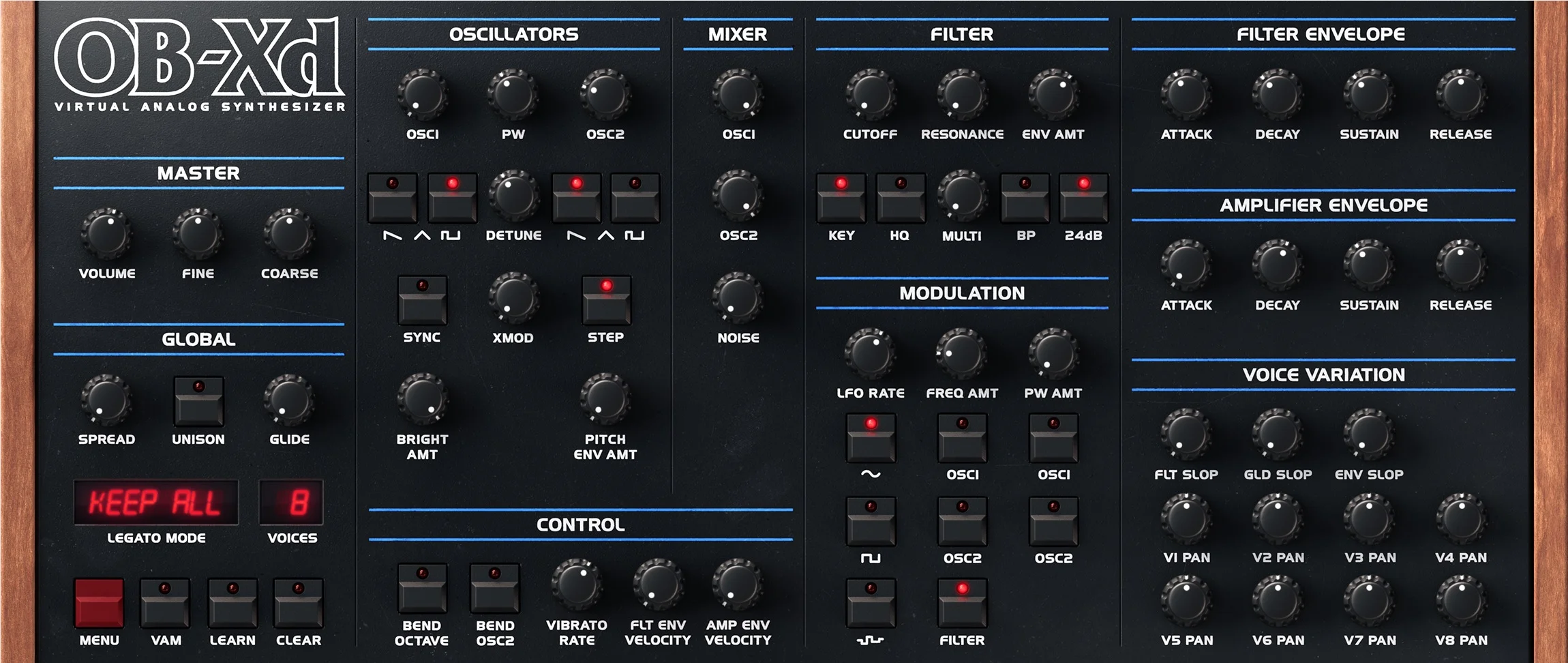
OB-Xd 2 now lives in Retromulator as its OB-Xd 2 core, with its own editor below the rack: up to 32 voices with unison, two oscillators per voice with saw and pulse waves, cross modulation and hard sync, a 12 dB multimode filter or a 24 dB four-pole low pass, per-voice panning and an LFO that syncs to the host tempo. When OB-Xd 2 is installed, the core shares its banks and presets, so a bank saved in one shows up in the other.


