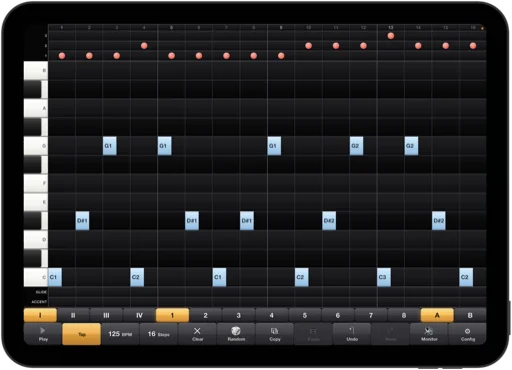
A singing voice synthesizer. Write a melody in the piano roll, type a word on each note, and Roboto sings it. The voice is synthesized with no samples, from a glottal pulse source, five formant resonators and shaped noise for consonants. Roboto is free and runs as a plugin or standalone on macOS, Windows, Linux, iPhone and iPad.
Count the Stars
Count the Stars
Marching Robots
Marching Robots
Features
Song editor
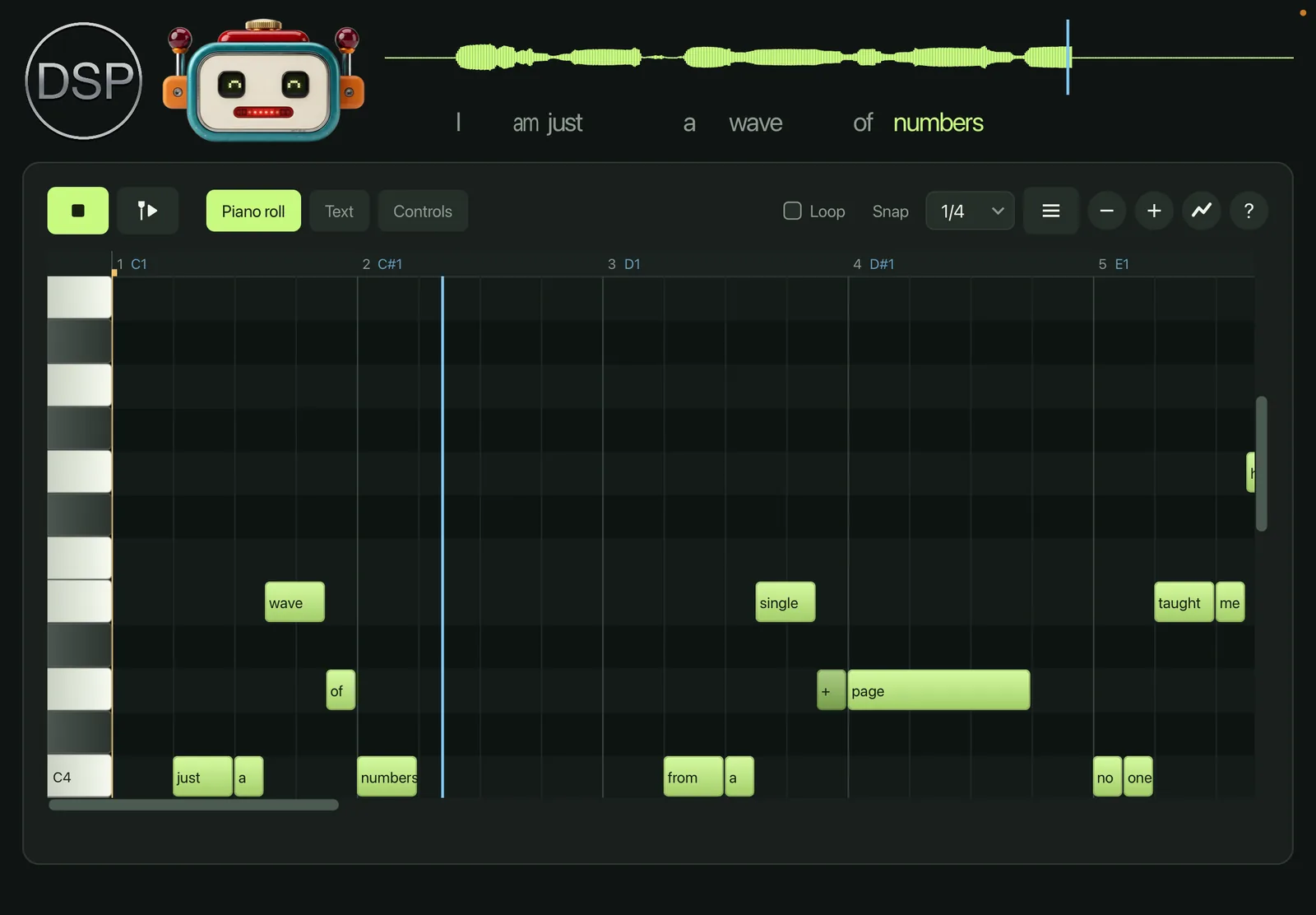
Piano roll where every note carries a word. A note named + sings the next syllable of the previous word.
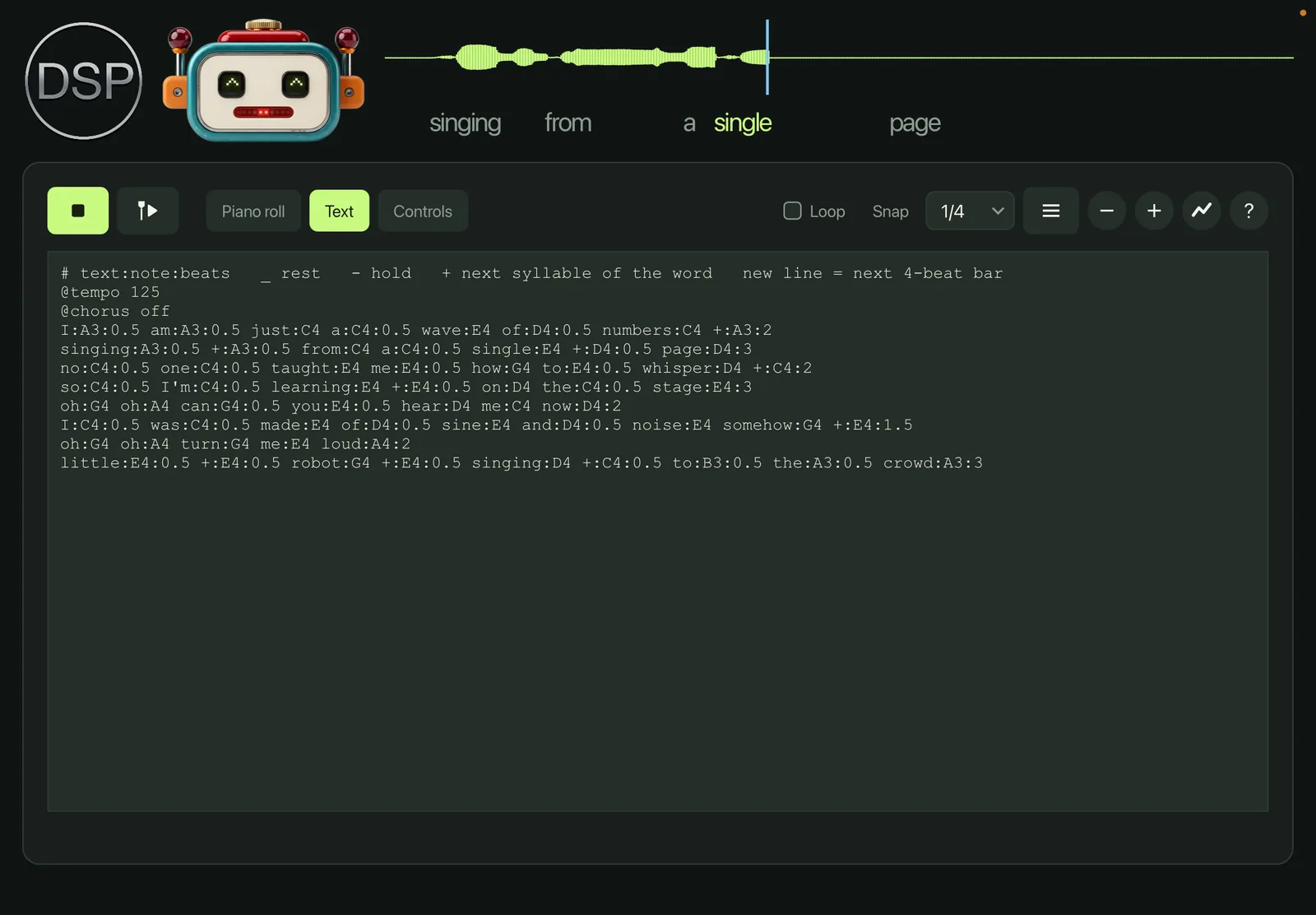
Text tab that holds the whole song as text (word:note:beats), so songs can be typed or pasted.
Automation curves along the song for volume, pitch bend, vibrato depth, breath, formant shift and chorus.
Twelve built-in songs to try.
Voice
Synthesized voice with no samples: a glottal pulse source, five formant resonators and shaped noise for consonants.
English words are turned into phonemes by built-in rules and a word list. Phonemes can also be typed directly, for example S-T-R-IY-T.
Ten voice presets: Default, Robot, Soprano, Bass, Child, Whisper, Choir, Opera, Giant and Alien.
Controls
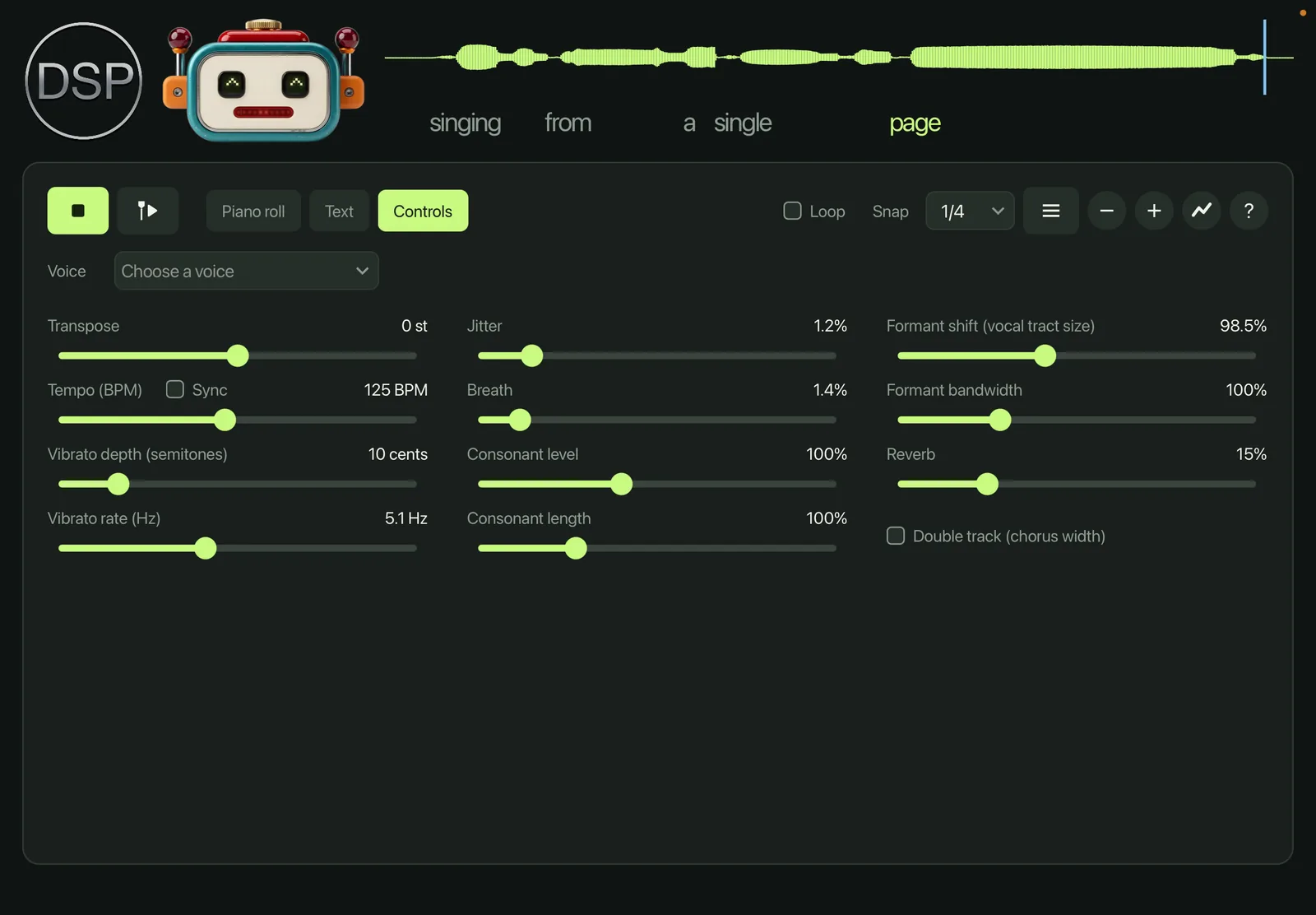
Transpose, tempo with optional host sync, vibrato depth and rate, jitter and breath.
Consonant level and length, formant shift (vocal tract size) and formant bandwidth.
Reverb and double track.
Display
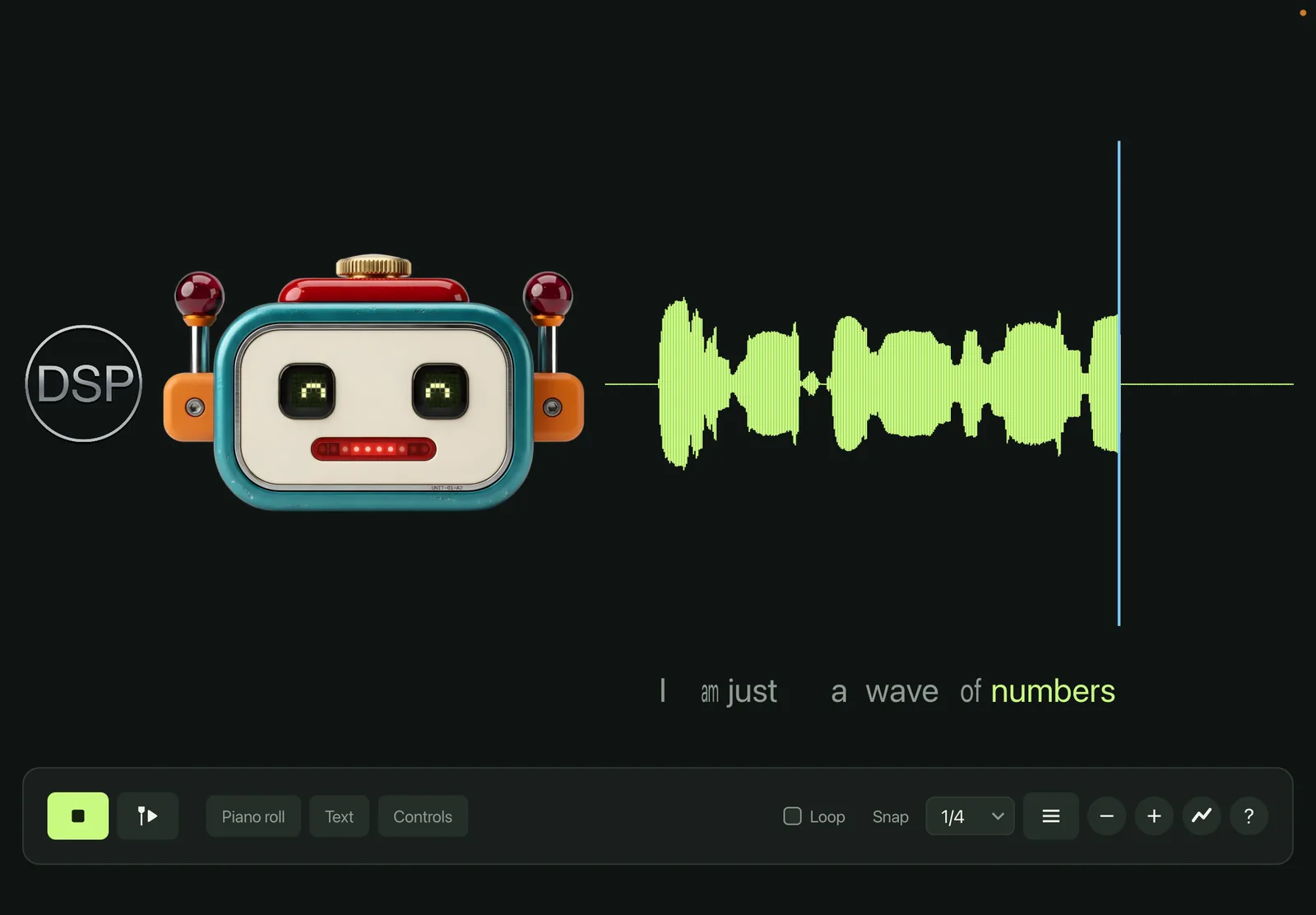
Animated robot face with LED eyes and a mouth that follow the voice.
Live waveform, and lyrics that light up in time with the song.
MIDI and export
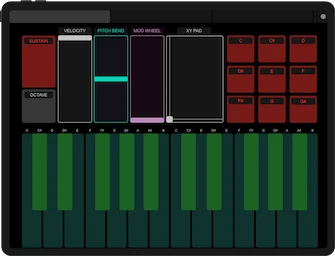
MIDI keys from C1 sing from the matching bar while held.
MIDI controllers drive volume, vibrato, breath, formant shift and chorus.
Export to WAV and to MIDI with notes, lyrics, tempo and the curves as controllers.
Plugin
VST3, AU and standalone on macOS, VST3 and standalone on Windows and Linux, AUv3 and standalone on iPhone and iPad.
All voice parameters can be automated by the host.
System Requirements
macOS 12 or later (Apple Silicon and Intel): VST3, AU and standalone.
Windows and Linux (64-bit): VST3 and standalone.
iOS 15 or later (iPhone and iPad): standalone and AUv3.