SYNTHESIZERS
Corona
Discovery
Discovery Pro

OB-XD
OPL
Vertigo
SAMPLERS
Bliss
EFFECTS
FX Bundle
Soundware
Presets
Retromulator
WavePrompt
MORE
KeyPad
MidiKeys
TDminator
SYNTHESIZERS
Corona
Discovery
Discovery Pro
OB-XD
OPL
Vertigo
SAMPLERS
Bliss
EFFECTS
FX Bundle
Soundware
Presets
Retromulator
WavePrompt
MORE
KeyPad
MidiKeys
TDminator
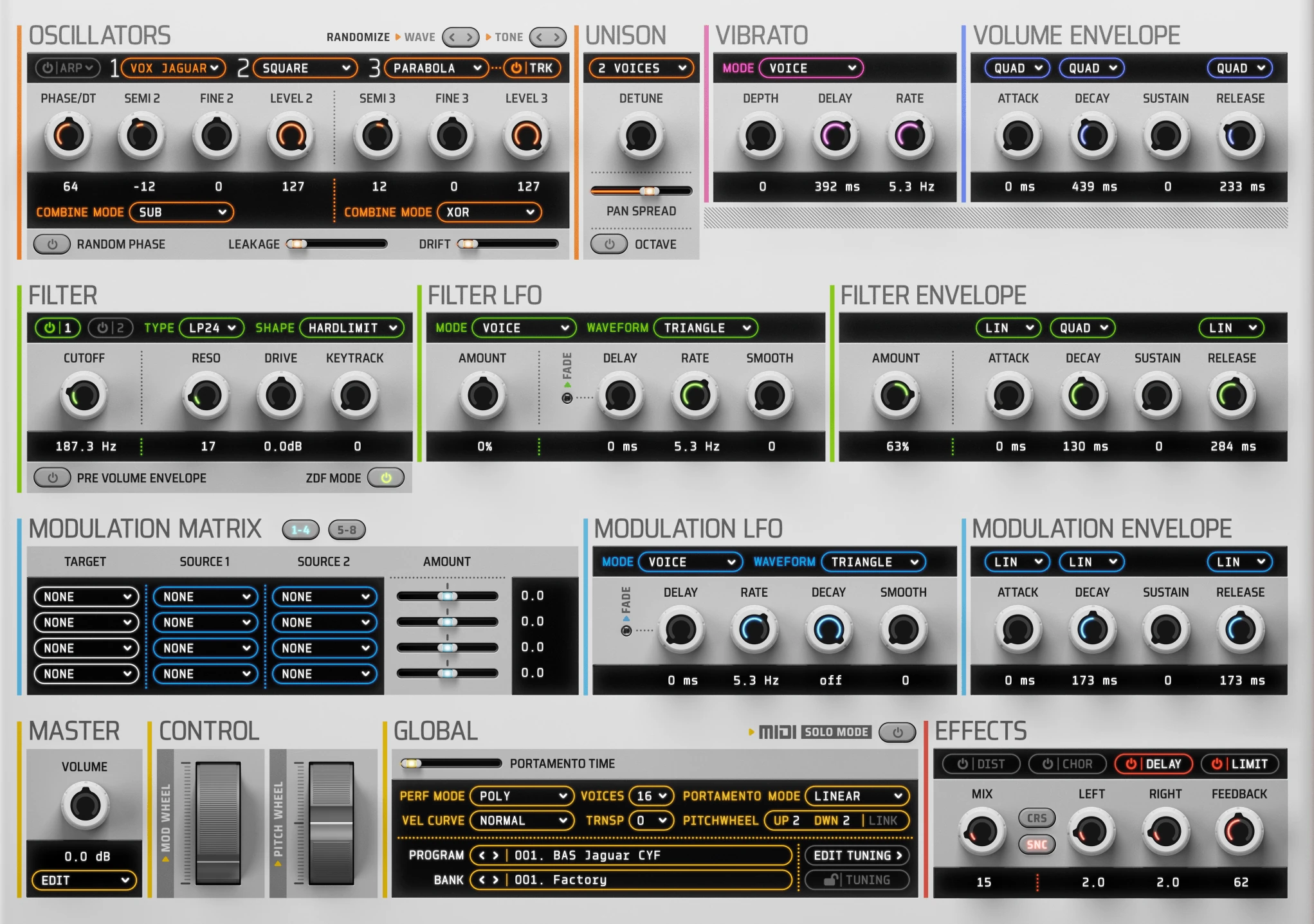

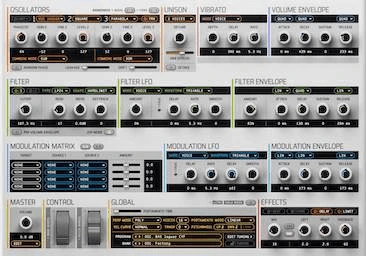
Corona is a hybrid synth combining virtual analog and wavetable synthesis. Three VA/WAVE oscillators with 16 combine modes, Super 7 and Super 7+ unison modeled on the Roland® JP-8080, dual zero-delay feedback filters, a 32-step arpeggiator, 3 LFOs, 3 ADSR envelopes, an 8-destination modulation matrix, and built-in distortion and chorus.
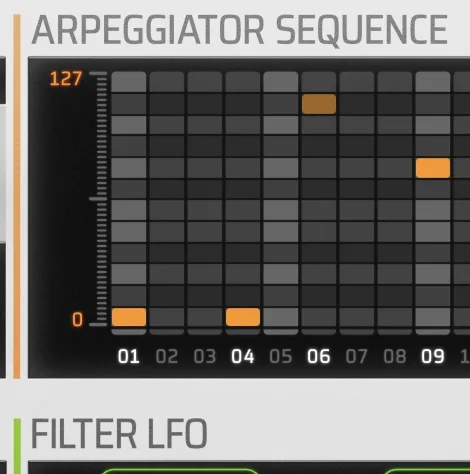
Corona 7 Sequencer arpeggiator mode turns the velocity lane into a 12 semitone note grid with key transpose and three trigger modes: SEQ HOLD runs while a key is held, SEQ TOGGLE latches until the same key is pressed again, and SEQ SYNC holds a new key until the loop wraps, so re-pitching never breaks the pattern mid-bar.
Edit > Record arms a step cursor driven from MIDI in: C4-B4 write a semitone, C3 ties, D3 rests and E3 steps back. Generate Sequence builds a playable bassline with one scale per take, a groove template, the root on the downbeat and a resolution at the end of the bar.
Edit > Export MIDI writes the pattern as a one-bar loop with ties merged into held notes, M1 and M2 as CC22 and CC23, and host tempo and time signature in a leading tempo track.
MIDI Learn with CC overlay badges on every assignable control. Edit > MIDI, click a control, move a knob and you're done. MIDI boards group by manufacturer.
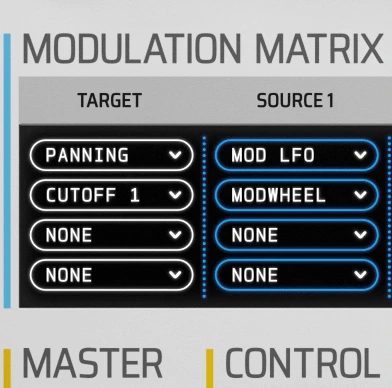
Mod matrix has 30 destination presets in the Destination dropdowns. Arpeggiator has a Show/Hide toggle and scroll-wheel support for ArpSteps.
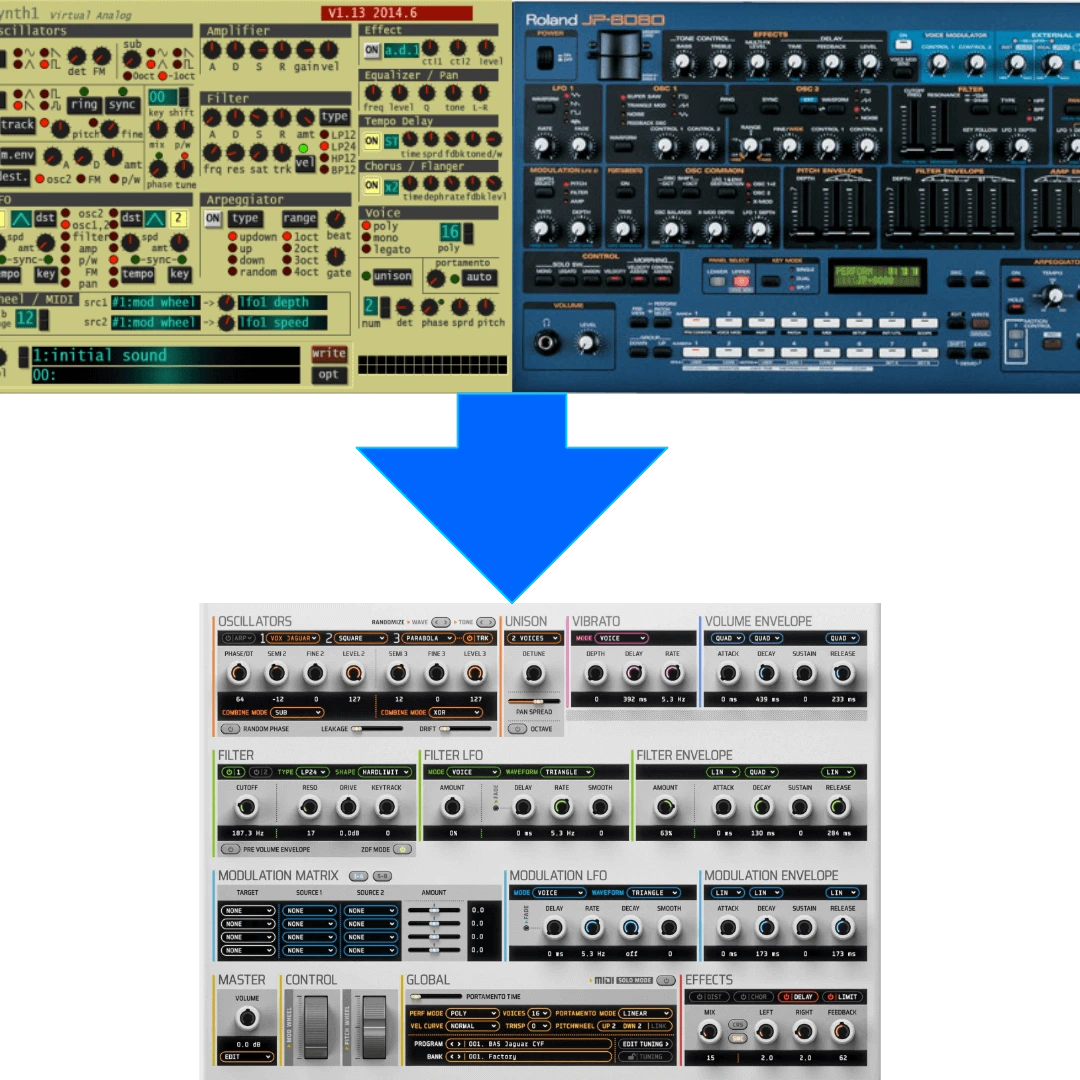
Drag-and-drop import for Synth1 (.sy1) presets and SysEx import for the Roland JP-8000 and JP-8080, so you can load existing patches you already know rather than rebuilding them.
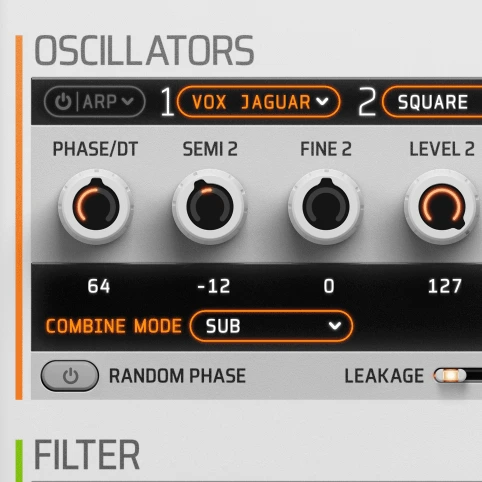
Three oscillators run through operator combine modes (12 in Phase mode, 16 in Detune mode), so the same three sources cover ground from clean stacks to FM and ring-mod territory:
Bitwise modes
Standard and absolute AND, OR, XOR applied to waveform samples at the binary level. Doesn't sound like additive or subtractive, it sounds like bit math, with the digital grit and pseudo-rhythmic artifacts that come with it.
Drop a SoundFont 2 or WAV file onto the GUI, or use Edit > File > Import Wave. Folders with a .dwb extension show up as their own categories in the browser.
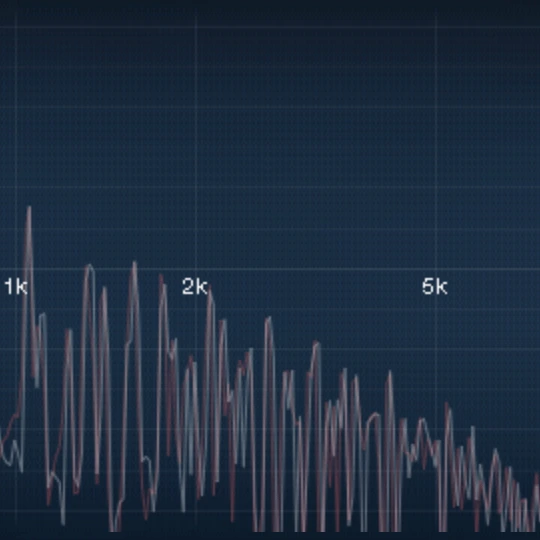
14 filter types in 2-pole and 4-pole versions, with selectable shapes (tanh, poly, asym1/2/3, hardlimit, polywrap, asymwrap, quantize, asymquantize). Bipolar drive, keytracking, and pre/post volume envelope routing. ZDF mode for the zero-delay feedback path.
Full MIDI Polyphonic Expression, applied per note. Per-note pressure, timbre (CC74) and pitch bend arrive as their own modulation matrix sources, so you can route each one to any destination and bend, slide or brighten a single finger while the rest of the chord holds still.
Plug in a LinnStrument, ROLI Seaboard, Sensel Morph, Haken Continuum or Expressive E Osmose and Corona reads the MPE Configuration Message (RP-053) and per-channel bend range over RPN to configure itself. Mode, zone and bend range are set in the MIDI menu and saved per instance, so two instances in a project can differ. A polyphonic aftertouch mode covers controllers without MPE, and the Global panel shows MPE or Poly AT status pills.
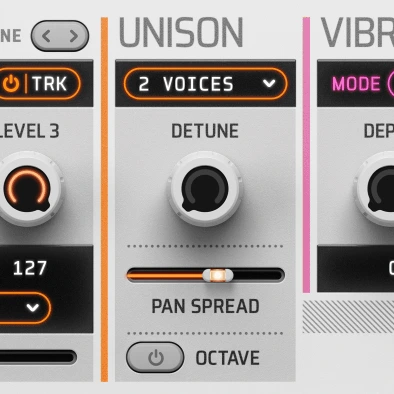
Dedicated unison stage with octave spread, voice count, detune, and stereo spread.
Super 7 mode with saw, parabolic, square, triangle, or sine sources for JP-8080-style supersaws.
Super 7+ adds the JP-8000 mix law and per-saw stereo panning: it matches Super 7 at zero spread and rises to the JP-8000 curve at maximum, with a Panning Spread fader that places each of the seven saws individually and draws them as glowing dots.
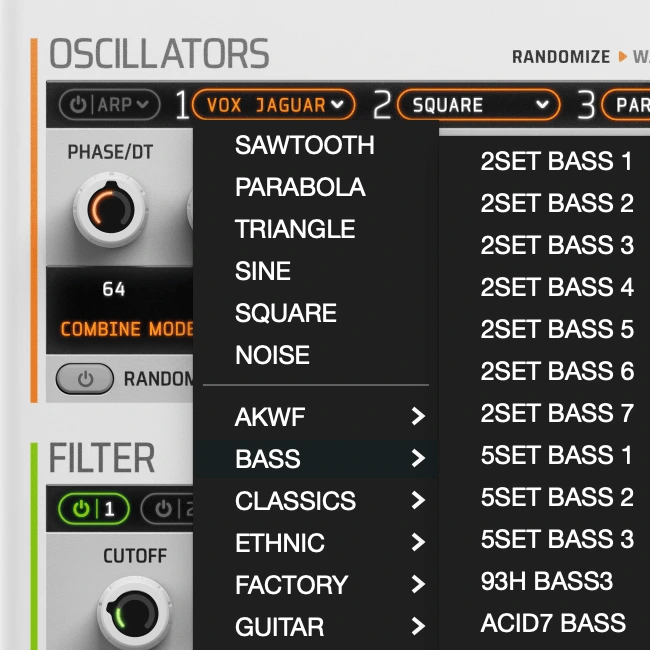
Wave Expansion includes 300+ MB of multi-layer waveforms on top of the standard VA set (saw, triangle, square, sine, parabola, noise).
Two extra DWB banks add 300+ single-cycle waveforms sampled from hardware:

Six selectable curve shapes per envelope stage.
Sources for the matrix:
Supported Platforms
Universal Binary 2: Native Intel and Apple Silicon.
Standalone Application: No additional software required.
ProTools AAX. Apple Audio Unit. Steinberg VST. Steinberg VST3.





System Requirements
 Windows 10+. IntelIntel processors with AVX2 support:
 10.14+. Apple Silicon or IntelMacBook Pro: Late 2013+
 Debian 10+. IntelIntel processors with AVX2 support: