‹ Previous November 2026 October 2026 September 2026 August 2026 July 2026 June 2026 May 2026 April 2026 March 2026 February 2026 January 2026 December 2025 November 2025 October 2025 September 2025 August 2025 July 2025 June 2025 May 2025 April 2025 March 2025 February 2025 January 2025 December 2024 September 2024 August 2024 July 2024 June 2024 May 2024 April 2024 March 2024 February 2024 January 2024 December 2023 September 2023 August 2023 July 2023 June 2023 May 2023 April 2023 March 2023 February 2023 January 2023 December 2022 November 2022 October 2022 September 2022 August 2022 July 2022 May 2022 April 2022 March 2022 February 2022 January 2022 December 2021 November 2021 September 2021 August 2021 July 2021 May 2021 April 2021 February 2021 January 2021 December 2020 October 2020 September 2020 August 2020 July 2020 June 2020 May 2020 April 2020 March 2020 January 2020 December 2019 November 2019 October 2019 September 2019 August 2019 June 2019 May 2019 April 2019 March 2019 November 2018 October 2018 September 2018 August 2018 July 2018 June 2018 May 2018 April 2018 March 2018 January 2017 December 2016 October 2016 September 2016 July 2016 June 2016 May 2016 April 2016 March 2016 February 2016 January 2016 December 2015 November 2015 October 2015 September 2015 August 2015 July 2015 June 2015 May 2015 April 2015 March 2015 February 2015 December 2014 November 2014 September 2014 August 2014 July 2014 June 2014 May 2014 April 2014 March 2014 February 2014 January 2014 December 2013 November 2013 October 2013 September 2013 July 2013 April 2013 February 2013 December 2012 November 2012 September 2012 August 2012 July 2012 June 2012 May 2012 April 2012 March 2012 February 2012 January 2012 December 2011 November 2011 October 2011 September 2011 August 2011 July 2011 May 2011 April 2011 March 2011 February 2011 December 2010 November 2010 September 2010 August 2010 July 2010 June 2010 May 2010 April 2010 February 2010 January 2010 November 2009 October 2009 September 2009 August 2009 May 2009 March 2009 February 2009 December 2008 November 2008 October 2008 September 2008 July 2008 June 2008 April 2008 March 2008 February 2008 December 2007 November 2007 September 2007 August 2007 July 2007 June 2007 May 2007 December 2006 November 2006 October 2006 August 2006 May 2006 March 2006 December 2005 November 2005 June 2005 March 2005 February 2005 January 2005 December 2004 November 2004 October 2004 August 2004 May 2004 April 2004 March 2004 February 2004 January 2004 November 2003 October 2003 September 2003 August 2003 June 2003 April 2003 March 2003 February 2003 January 2003 December 2002 October 2002 August 2002 Next › May 23, 2020
We have released Schroeder reverb 1.0 for macOS as AudioUnits and VST3.
Additional information can be found at Schroeder page .
May 22, 2020
We have released Scope 1.1 for macOS, Windows and Linux as AudioUnits, VST and VST3.
What's new
Standalone app for Windows, macOS and Linux. Additional information can be found at Scope page .
May 21, 2020
We have released OPL 1.3 for macOS, Windows and Linux as AudioUnits, VST, VST3 and Standalone.
What's new
GUI tweaks.
Larger ADSR faders.
Editable ADSR values.
Editable Attenuation dB values.
Additional information can be found at OPL page .
May 16, 2020
We have released OPL 1.2 for macOS, Windows and Linux as AudioUnits, VST, VST3 and Standalone.
What's new
Scalable GUI.
Fixed file operations issues.
Additional information can be found at OPL page .
May 14, 2020
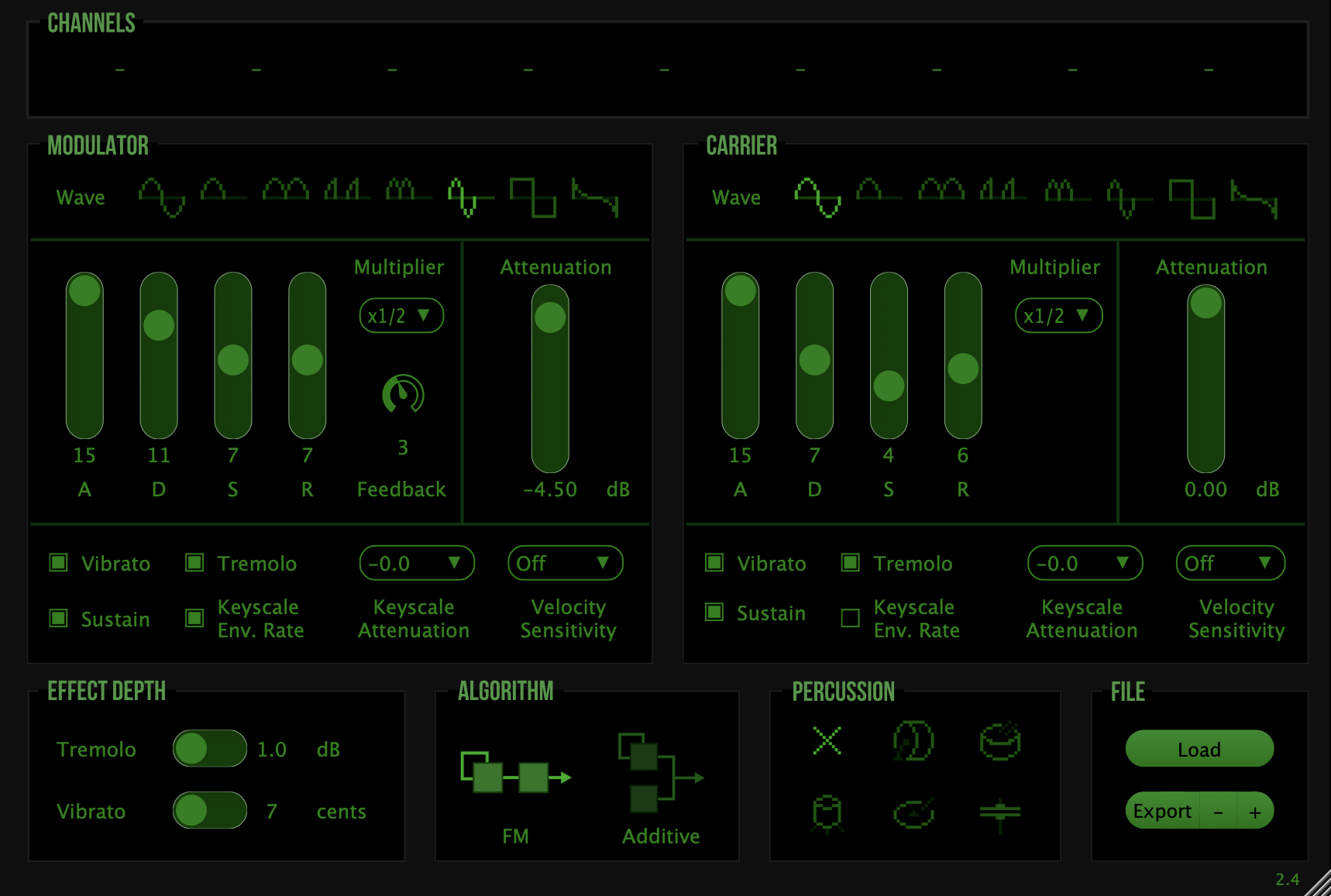
We have released OPL for macOS, Windows and Linux as AudioUnits, VST, VST3 and Standalone.
The OPL is a digital sound synthesis chip developed by Yamaha in the mid 1980s. Among other products, it was used in sound cards for PC, including the Ad Lib card and early Sound Blaster series.
At a technical level: the emulator has channels comprised of 2 oscillators each. Each pair of oscillators is usually combined via phase modulation (basically frequency modulation). Each oscillator can produce one of eight waveforms (sine, half sine, absolute sine, quarter sine, alternating sine, camel sine, square, logarithmic sawtooth), and has an ADSR envelope controlling its amplitude. The unusual waveforms give it a characteristic sound.
Includes 2480 Sound Blaster instrument presets.OPL page .
May 11, 2020
We have released Scope for iPadOS and iOS as Standalone and AUv3.
Additional information can be found at Scope App Store page .
May 9, 2020
We have released Scope for macOS, Windows and Linux as AudioUnits, VST and VST3.
An oscilloscope uses a two-axis graph to give a visual representation of a waveform over time, with the horizontal axis representing time and the vertical axis representing the amplitude.
Oscilloscopes are frequently used to assist dynamics processing and sound synthesis. It's usually placed last in the signal chain, so that it analyses the cumulative effects of any plugins placed before it. Like any analysis plugin, though, you can place it anywhere in the chain, to view the signal at that point.
Additional information can be found at Scope page .
May 4, 2020
Discovery Pro has been updated to 7.0.
What's new
Active voices are now muted on program change.
ASIO support in Windows Standalone app.
EDIT menu redesign and enhancements.
Enhanced preset interaction with AU and VST3 hosts.
Fixed automation parameter display in Cubase VST3.
Framework update for increased stability and compatibility.
Full bank preset categorisation. Now 100 banks available.
macOS Standalone native menus and look & feel.
Parameter refactor with enhanced automation and proper learn, touch and latch modes support.
Preset list enhancements for VST3 and AU.
Removed Linux Webkit component for increased compatibility.
Upgrades and cross-grades for previous customers are available at Members Area .
‹ Previous November 2026 October 2026 September 2026 August 2026 July 2026 June 2026 May 2026 April 2026 March 2026 February 2026 January 2026 December 2025 November 2025 October 2025 September 2025 August 2025 July 2025 June 2025 May 2025 April 2025 March 2025 February 2025 January 2025 December 2024 September 2024 August 2024 July 2024 June 2024 May 2024 April 2024 March 2024 February 2024 January 2024 December 2023 September 2023 August 2023 July 2023 June 2023 May 2023 April 2023 March 2023 February 2023 January 2023 December 2022 November 2022 October 2022 September 2022 August 2022 July 2022 May 2022 April 2022 March 2022 February 2022 January 2022 December 2021 November 2021 September 2021 August 2021 July 2021 May 2021 April 2021 February 2021 January 2021 December 2020 October 2020 September 2020 August 2020 July 2020 June 2020 May 2020 April 2020 March 2020 January 2020 December 2019 November 2019 October 2019 September 2019 August 2019 June 2019 May 2019 April 2019 March 2019 November 2018 October 2018 September 2018 August 2018 July 2018 June 2018 May 2018 April 2018 March 2018 January 2017 December 2016 October 2016 September 2016 July 2016 June 2016 May 2016 April 2016 March 2016 February 2016 January 2016 December 2015 November 2015 October 2015 September 2015 August 2015 July 2015 June 2015 May 2015 April 2015 March 2015 February 2015 December 2014 November 2014 September 2014 August 2014 July 2014 June 2014 May 2014 April 2014 March 2014 February 2014 January 2014 December 2013 November 2013 October 2013 September 2013 July 2013 April 2013 February 2013 December 2012 November 2012 September 2012 August 2012 July 2012 June 2012 May 2012 April 2012 March 2012 February 2012 January 2012 December 2011 November 2011 October 2011 September 2011 August 2011 July 2011 May 2011 April 2011 March 2011 February 2011 December 2010 November 2010 September 2010 August 2010 July 2010 June 2010 May 2010 April 2010 February 2010 January 2010 November 2009 October 2009 September 2009 August 2009 May 2009 March 2009 February 2009 December 2008 November 2008 October 2008 September 2008 July 2008 June 2008 April 2008 March 2008 February 2008 December 2007 November 2007 September 2007 August 2007 July 2007 June 2007 May 2007 December 2006 November 2006 October 2006 August 2006 May 2006 March 2006 December 2005 November 2005 June 2005 March 2005 February 2005 January 2005 December 2004 November 2004 October 2004 August 2004 May 2004 April 2004 March 2004 February 2004 January 2004 November 2003 October 2003 September 2003 August 2003 June 2003 April 2003 March 2003 February 2003 January 2003 December 2002 October 2002 August 2002 Next ›