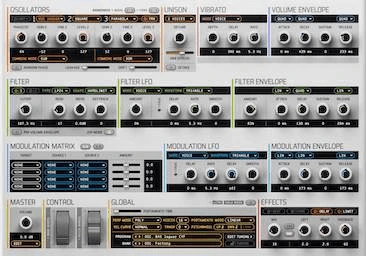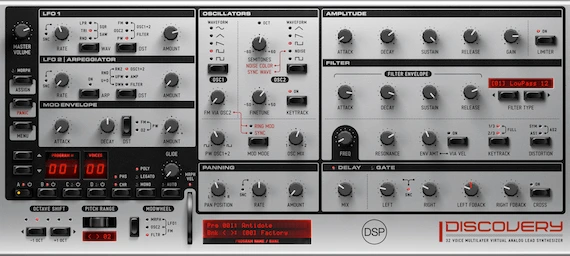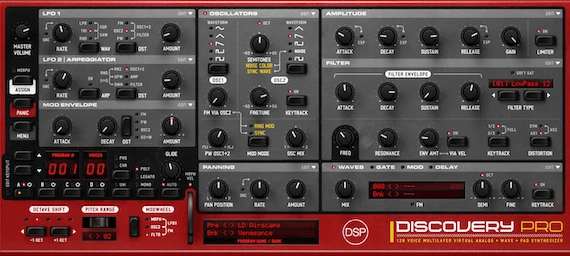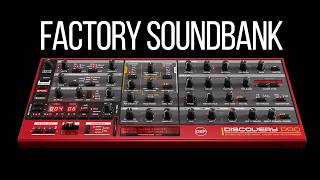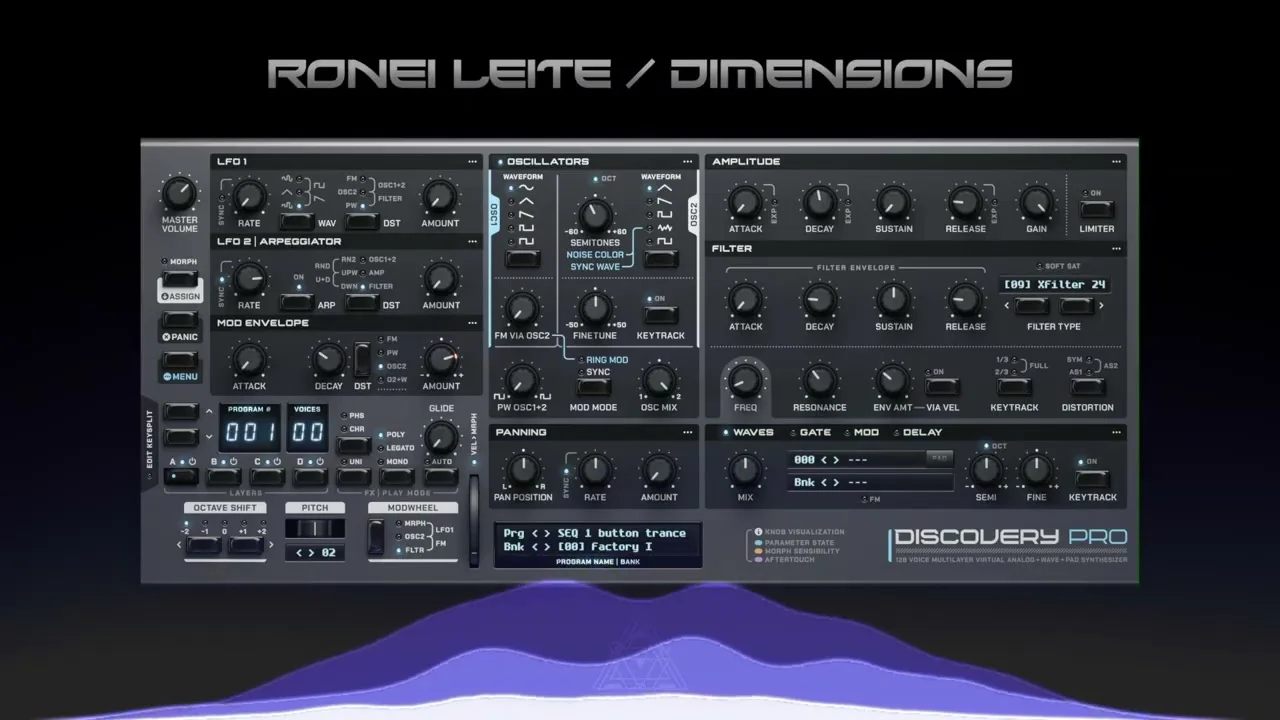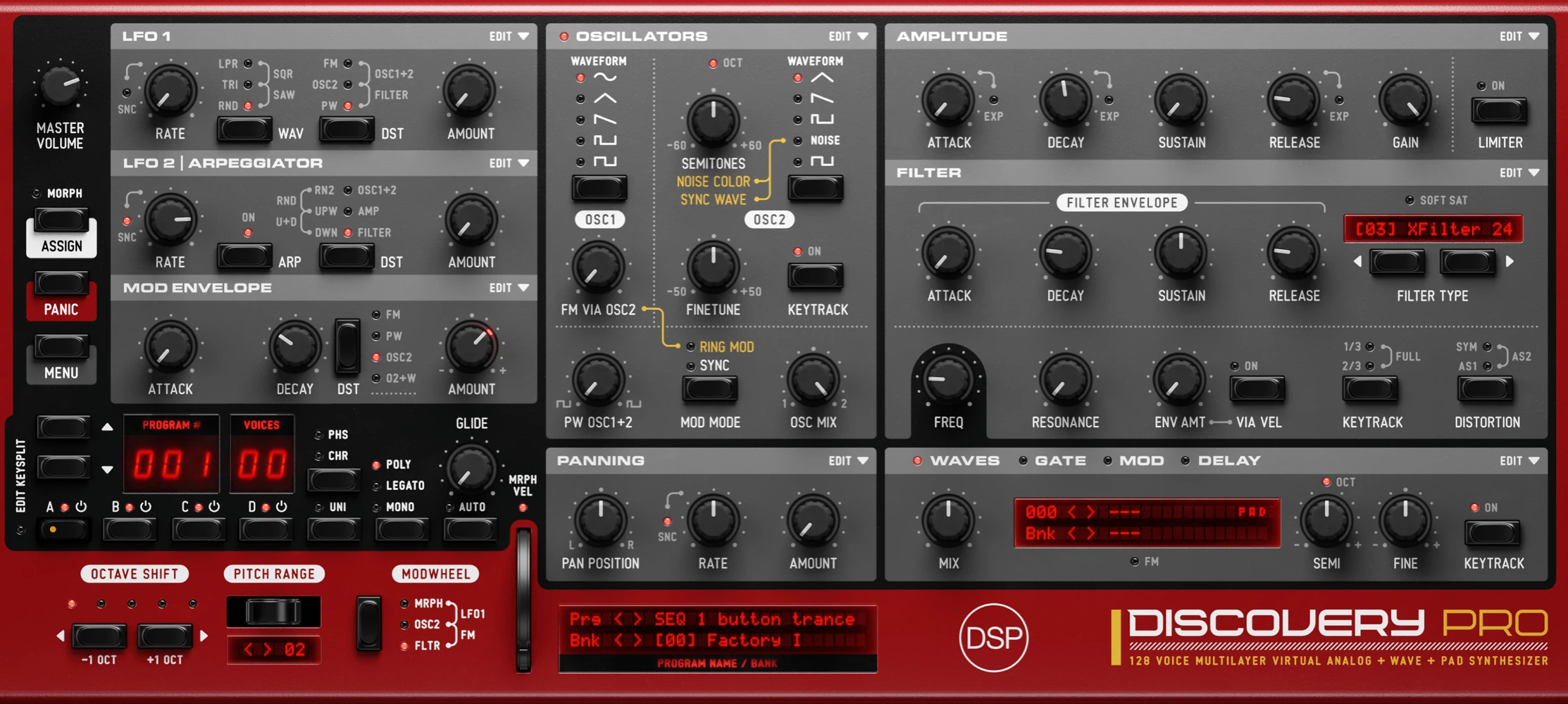
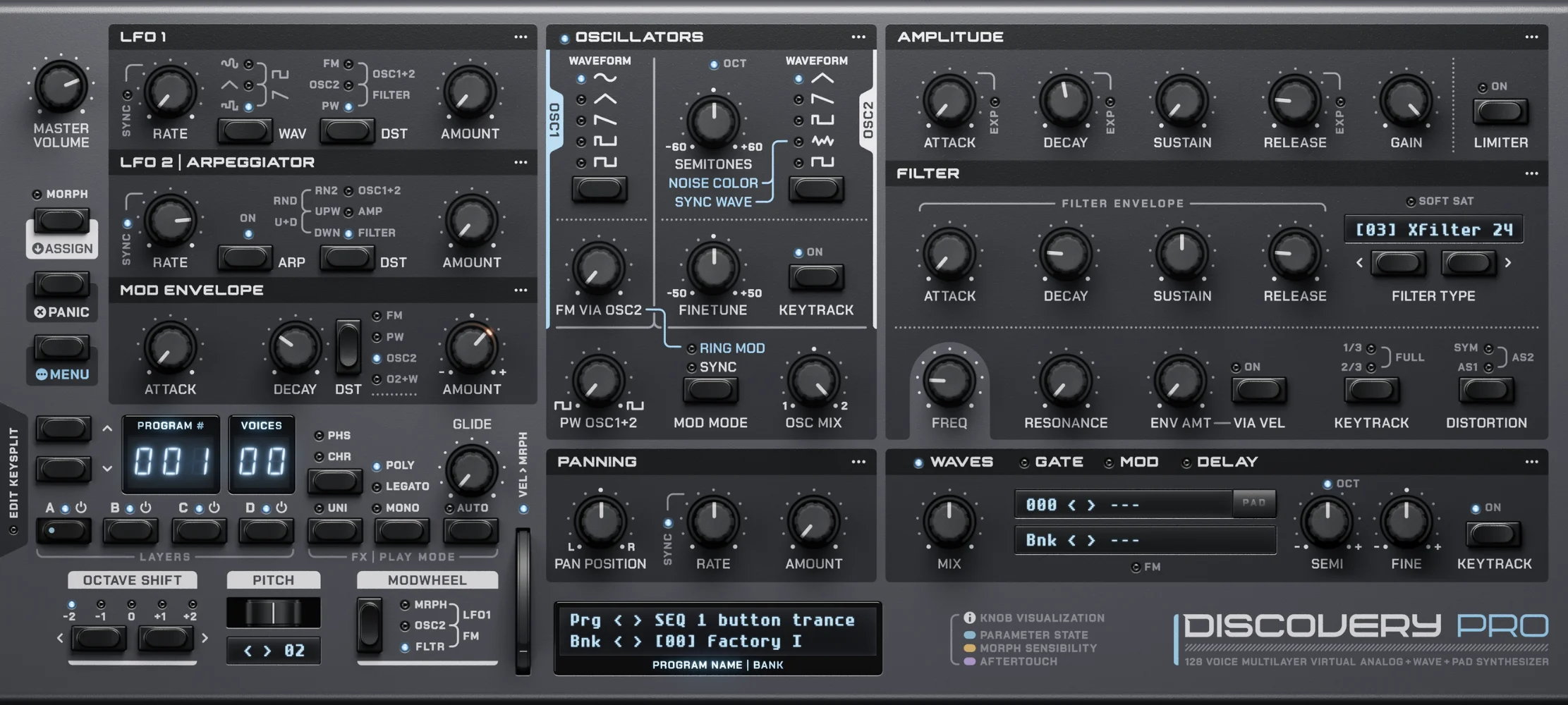
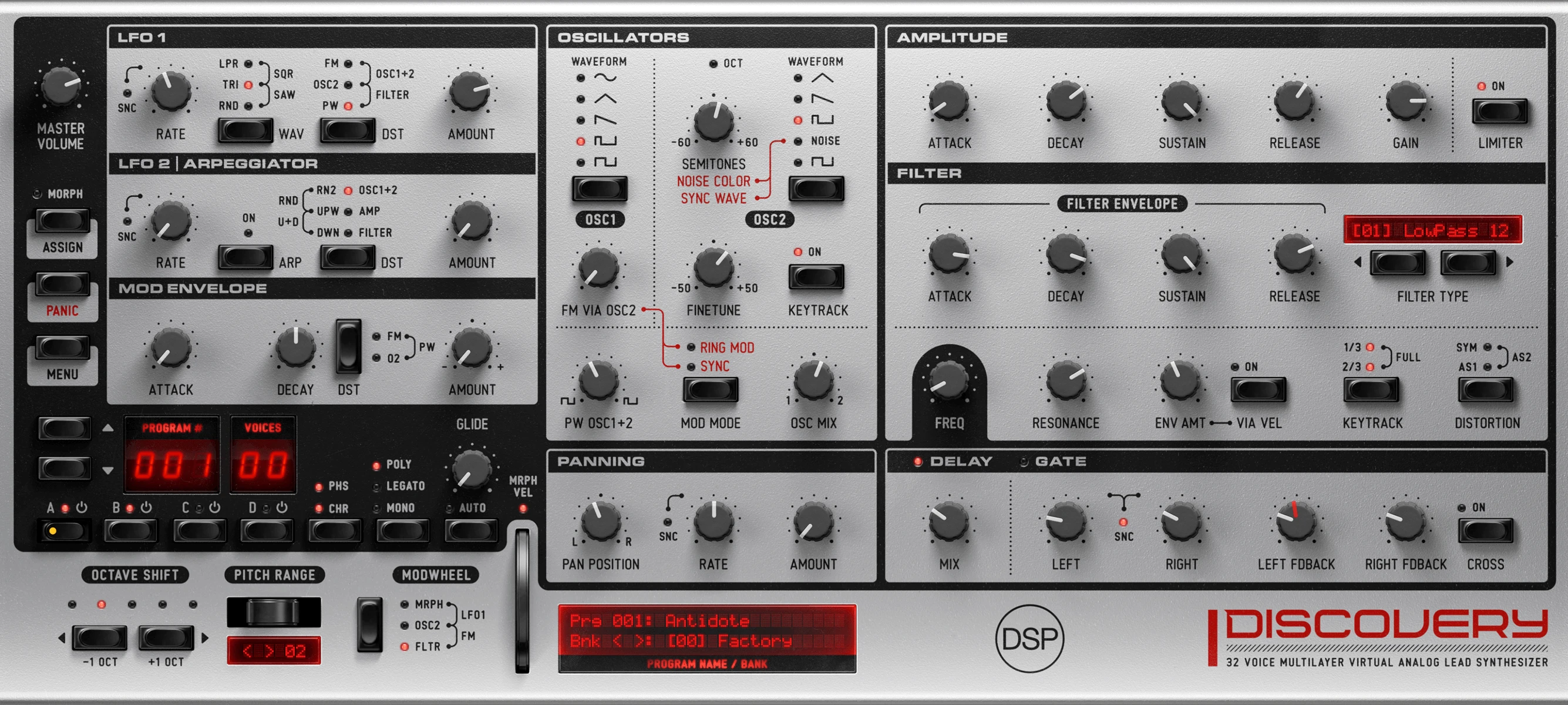
Discovery Pro is a Nord Lead-style virtual analog you can put inside your DAW. Four layers, twelve oscillators, and 16 filter types including Nord Lead Zero Delay Feedback, Moog Ladder, and Oberheim SEM. Full Nord Lead SysEx import/export keeps your existing patches working both ways. Loads SFZ, WAV and SoundFont content into the wavetable engine, while PADsynth re-synthesizes any sound into evolving pads. Arpeggiator, panning modulation, stereo delay, gate and step modulation effects round out the rig.
Discovery Pro extends Discovery with 128 voices rendered across every CPU core, Nord Lead 2 unison with nine modeled detune modes plus a Custom mode where you place each voice by hand, and an oscillator section that goes past the Nord: JP-8080 Super 7 SuperSaw for trance leads, Deep FM at true Nord Lead 2 depth, Pink Noise and a Parabolic wave. Analog drift and Adaptive Filter Slope keep patches alive under the fingers, and up to 16x oversampling means bounces come out clean. And upgraded 5,000+ presets across 100 banks.
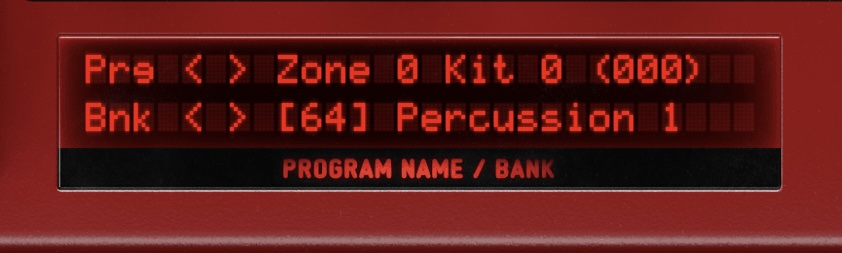
It is also built to be played, not just programmed. MPE and polyphonic aftertouch give every note its own pressure, bend and slide, aftertouch morph lets any knob move with how hard you press, and LFOs route across layers with graphical mod envelopes you draw instead of dial in. Percussion mode turns a bank into ten drum kits, the HDR interface lights up on capable Macs with a live oscilloscope and FFT, and the GUI scales with several skins. Octave key splits with zone presets, MIDI learn with XML templates for popular hardware, MTS-ESP micro-tuning, undo/redo and a standalone application among many other features round it out.

The first synthesizer with an HDR interface. Drawn in high dynamic range on macOS, on displays that support it: LEDs, the display and the metering go past the white point of the rest of the screen, so lit elements read as light sources instead of bright grey. On standard displays everything falls back to normal range with no change in layout.
Panel shading, knob rings and text stay sharp at every GUI size, and the extra headroom keeps low-level detail visible without crushing the highlights.
Full MIDI Polyphonic Expression, applied per note. Per-voice pressure, pitch bend, and Y (CC74) flow independently through the entire engine, so you can bend, slide, and brighten one finger while the rest of the chord holds still.
Plug in a LinnStrument, ROLI Seaboard, Sensel Morph, Haken Continuum or Expressive E Osmose and the plugin auto-detects the MPE Configuration Message (RP-053) and configures itself. Manager/member channel routing is handled correctly, so hybrid controllers like the Osmose CE behave exactly as expected. Real-time aftertouch and Y feedback light up the status LEDs so you see what every finger is doing.
Oscillator and filter code is hand-optimized for x86 and Apple Silicon.
The multicore voice engine renders voices across every CPU core in the machine. A cross-layer voice thread pool spreads active voices over all available cores, so heavy patches (high polyphony, stacked layers, oversampling) get far more headroom and reach the CPU protection ladder much later. Light patches are left alone, so simple work carries no threading overhead.
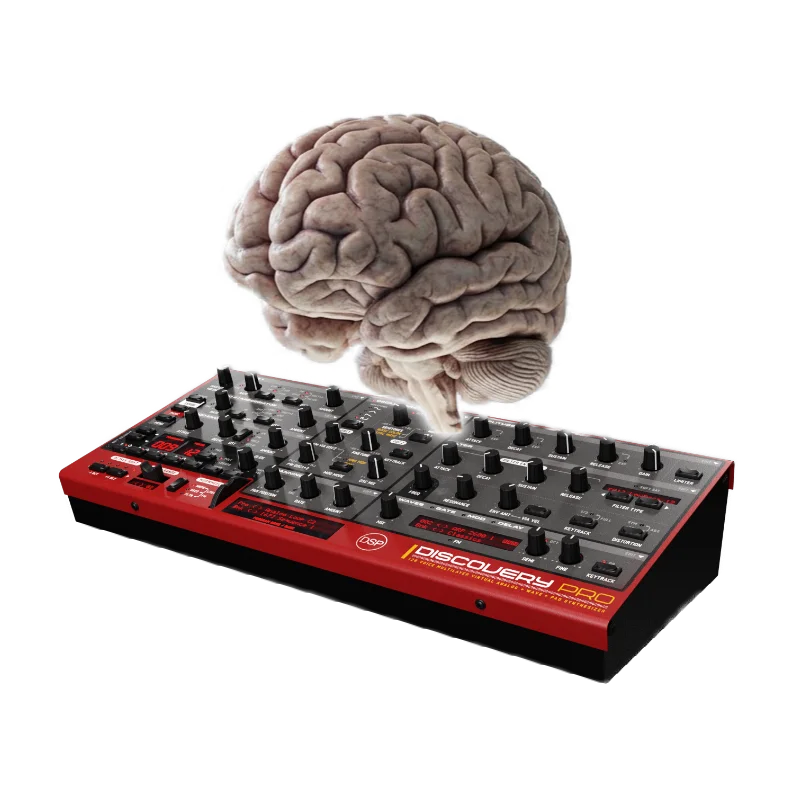
A preset generator that learned from the sounds you already love. Use MENU > Edit > Generate Preset to get a new, playable layer, trained on more than six thousand hand-made factory layers from the Discovery Pro library.
The model runs on your machine, inside the plugin and inside your session, with no cloud. Good for starting points: a bass you did not have in mind, or a pad that moves in a way you would not have programmed.
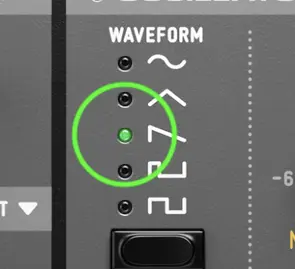
The Super 7 oscillator runs the Roland JP-8080 supersaw (one master saw plus six detuned saws) for trance leads and pads that sound like the source.
The Pulse Width knob sets the detune spread, from string-chorus subtle to full supersaw. PW is a regular mod destination, so LFO and the mod envelope can drive it. Phase is selectable between random-per-note (the JP-8080 default) and retriggered (consistent attack).
Stacks with Unison if you need it bigger. A green LED on the SAW button marks Super 7; blue marks Parabolic.
8x oversampling on the live engine with IIR/FIR filtering for low aliasing without the latency cost of brute-force upsampling. Bounce settings switch to 16x for higher-quality offline renders.
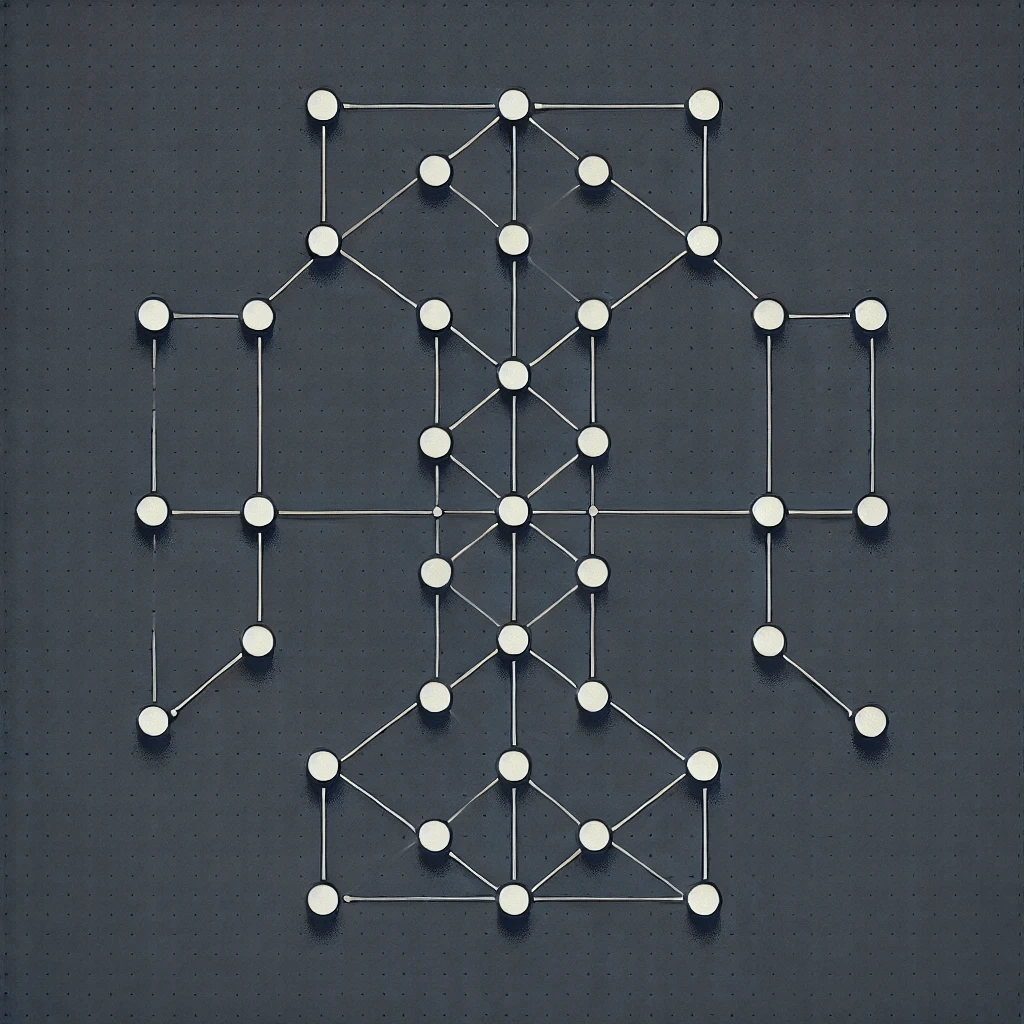
An arpeggiator mode driven by a probability matrix that updates as it plays. Each note influences the probability of the next, so the output drifts along instead of jumping randomly between unrelated notes.
Reads the octave-range parameter for vertical motion. Useful when you want pattern-like material without committing to a fixed sequence.
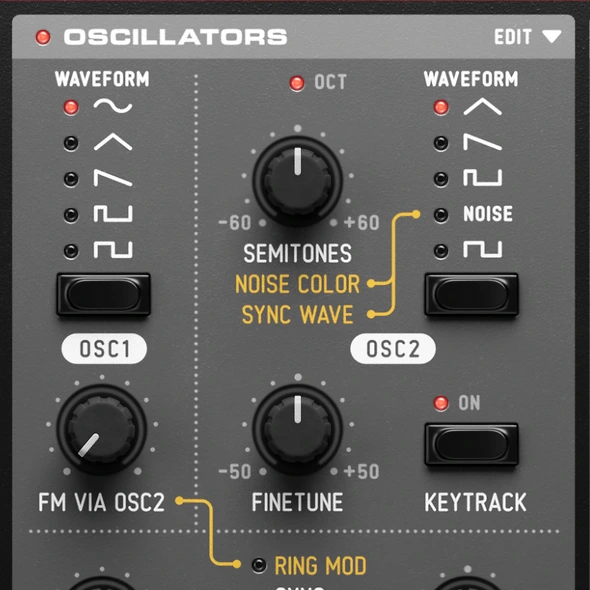
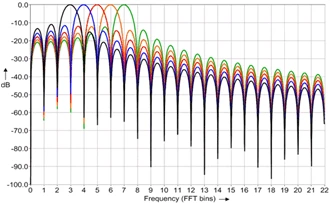
PADsynth renders WAVE waveforms and imported audio into looped, evolving textures, useful for pads, ensembles, choirs, and bells without recording or layering them by hand.
4-sample fade-in/out at the loop boundary removes the click rendered versions used to have. Render time goes up to 24 seconds (from 6) for longer source material.
Output is written as SFZ with loop_mode=loop_continuous tags, so the rendered samples drop into any SFZ-capable sampler with the loops preserved.
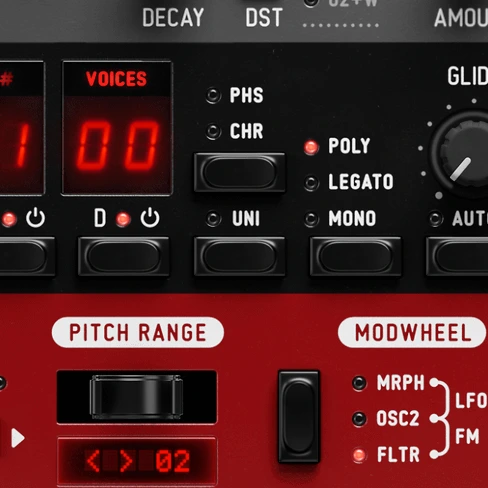
Nord Lead 2-modeled unison, calibrated against the hardware in Polyphonic and Legato/Mono modes.
All Nord Lead 2 detune modes are available. 8.24 adds Custom mode: drag up to four voice dots across a detune x pan plane to set pitch spread and stereo placement by hand. Layouts are stored per bank and mirrored globally, so new banks recall the last one you built. Poly > Unison Detune > Custom.
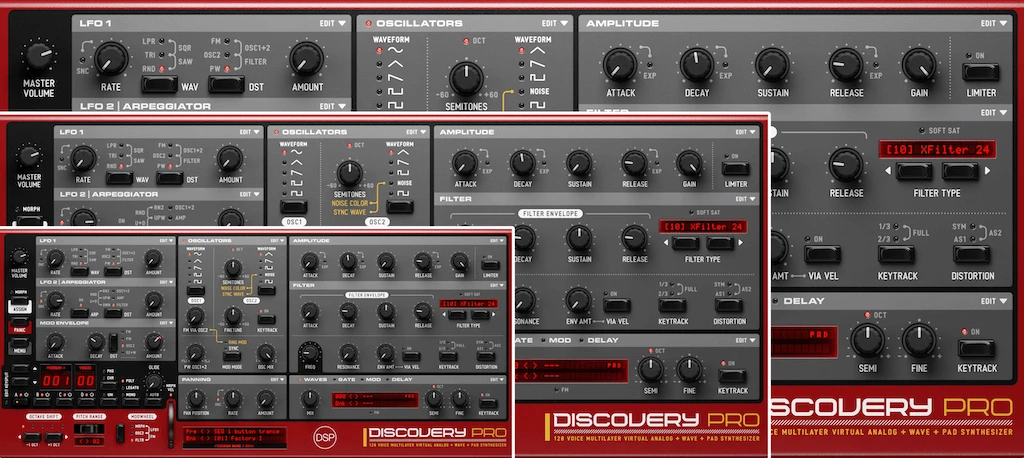
Five window sizes: 1x (400p), 1.25x (500p), 1.5x (600p), 1.75x (700p), 2x (800p). The new 1.25x and 1.75x tiers add crisp, sharply scaled steps between the existing sizes, and rendering is optimized at every size.
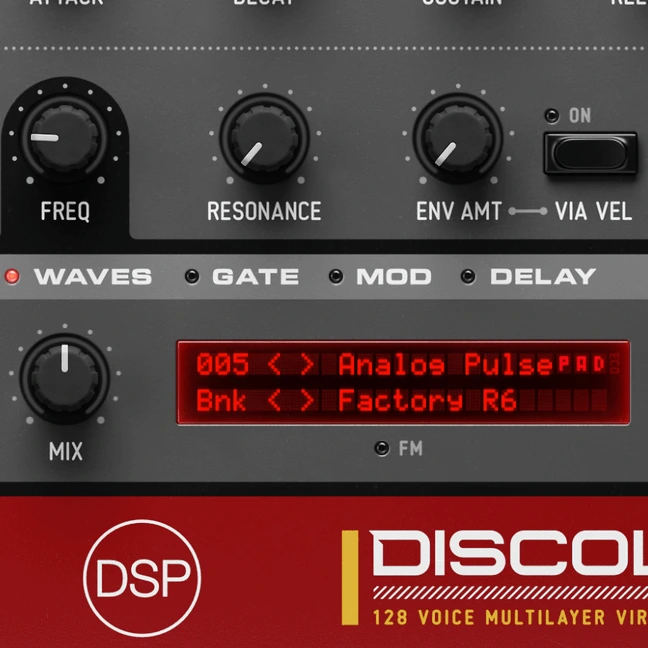
Drop WAV (16/24-bit), SoundFont 2.04 (SF2), or SFZ files into DWB banks. Uses high-quality sinc interpolation, so resampled tones stay clean across the keyboard.
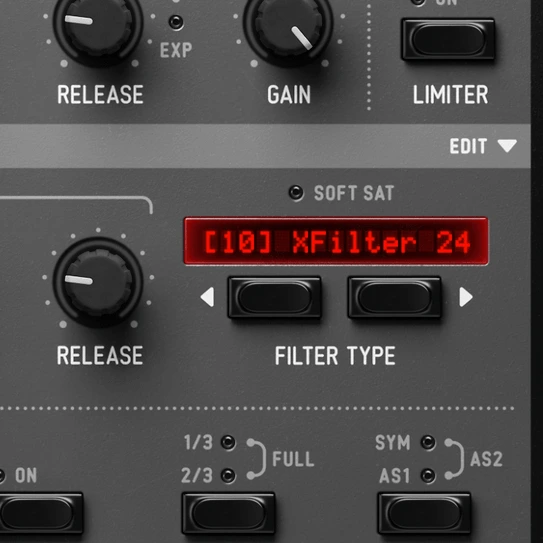
Zero-delay feedback filters modeled on the Nord Lead 2.
Moog Ladder 24 dB and 12 dB use trapezoidal integration with 4-stage tanh nonlinearity. Oberheim SEM comes in Classic and Raw variants with semitone-scaled frequency. Combined with Discovery's original 8 filters, that's 16 types in one slot.
Adaptive Filter Slope switches between 12 dB and 24 dB based on MIDI note and velocity: steeper on low notes for tighter bass, gentler on high notes to keep brightness, steeper on hard velocity in the mids. Works on every filter, including the Nord Lead 2, Moog Ladder, Oberheim SEM, and Phaser (adaptive tap count).
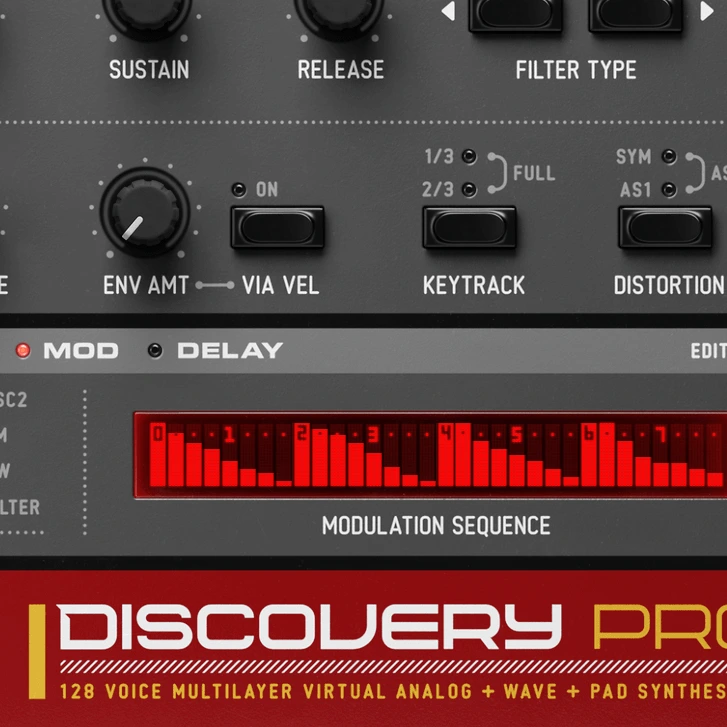
Click-and-drag to draw time-synced mod envelopes. Free-shape, not stage-based, so you can sketch a curve instead of dialing five segment parameters.
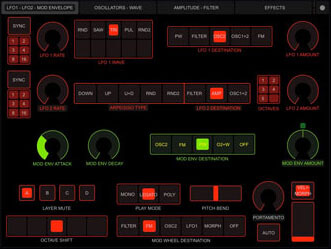
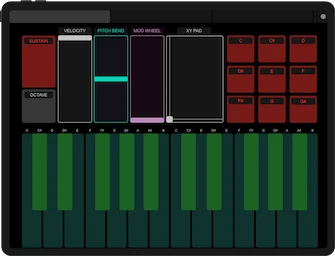
Free TouchOSC Mk1 template for iPad / Android. Edit it in the TouchOSC Mk1 app.
Supported Platforms
Universal Binary 2: Native Intel and Apple Silicon.
Standalone Application: No additional software required.
ProTools AAX. Apple Audio Unit. Steinberg VST. Steinberg VST3.






System Requirements
 Windows 10+. IntelIntel processors with AVX2 support:
 macOS 10.15+. Apple Silicon or IntelMacBook Pro: Late 2013+
 Debian 10+. IntelIntel processors with AVX2 support: